
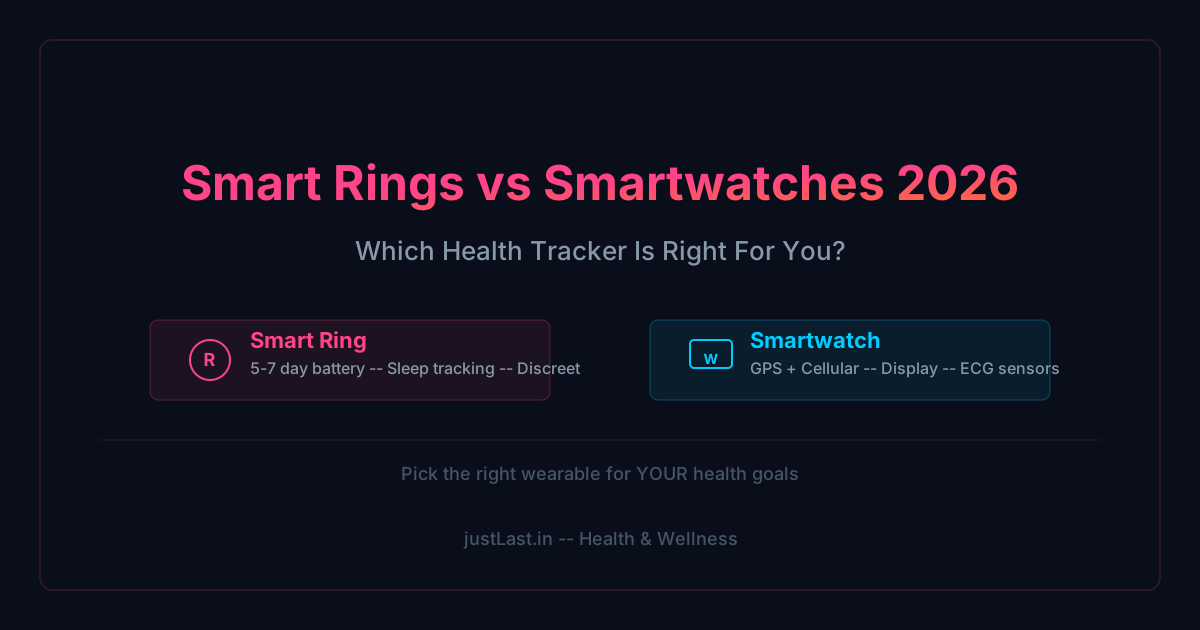

Key Takeaway: In 2026, the choice between a smart ring and a smartwatch comes down to how you prioritize comfort, battery life, and display vs comprehensive health tracking. Smart rings like the Oura Ring 5 and RingConn Gen 2 offer 24/7 wearability and days of battery life, while smartwatches provide GPS, cellular connectivity, and real-time screens. Your health goals and daily habits should drive the decision — not marketing hype.
Smart Rings vs Smartwatches 2026
A Practical Comparison of Wearable Health Tracking Options
Smart Rings
Comfortable 24/7 wear — up to 7 days battery
Smartwatches
Full display — GPS — cellular — 18-36hr battery
Best For
Sleep tracking, 24/7 health monitoring, discreet
wear, all-day comfort, minimal distraction
Best For
Fitness tracking with GPS, workout metrics,
notifications, calls, and app ecosystem
Oura Ring 5
Best overall accuracy
RingConn Gen 2
Best battery life + no sub
Ultrahuman Air
Best no-subscription
The right choice depends on your health priorities and daily habits
Sources: PCMag 2026 Smart Ring Testing | Wareable Best Smart Rings 2026 | Industry data
📖 Table of Contents
The Wearable Revolution in 2026
The wearable health tracking market has evolved dramatically. Smartwatches from Apple, Samsung, and Garmin have become powerful health platforms with ECG, blood oxygen monitoring, and fall detection. But smart rings have emerged as a compelling alternative, offering 24/7 wearability in a form factor that many find more comfortable than a wrist-worn device.
If you are shopping for a health tracker in 2026, you are likely wondering which category is right for you. This guide breaks down the key differences, top products in each category, and practical advice for making the right choice.
Smart Rings: The Pros and Cons
What Smart Rings Do Well
Smart rings excel at passive, continuous monitoring. Because they are small and unobtrusive, users wear them 24 hours a day — including during sleep. This is their superpower. While many smartwatch owners take their device off at night to charge, ring wearers get continuous sleep data every single night.
Battery life is another major advantage. Most smart rings in 2026 deliver 5-7 days of battery life, compared to 18-36 hours for a typical smartwatch. The RingConn Gen 2 leads the category with up to 10 days of battery life, making it truly set-and-forget.
Smart rings are also discreet. For professionals who do not want a bright screen on their wrist during meetings, or for anyone who finds traditional watches uncomfortable, a ring is an excellent alternative.
Where Smart Rings Fall Short
Smart rings cannot display information in real time. There is no screen, no GPS for running routes, no cellular connectivity for calls, and no way to glance at notifications. They are passive collectors of data that you review later on your phone.
They also struggle with activity tracking during workouts. While they can detect general movement and steps, they are less accurate than wrist-based optical sensors during跑步, cycling, or weightlifting because the finger has different blood flow dynamics than the wrist.
Smartwatches: The Pros and Cons
What Smartwatches Do Well
Smartwatches are full-featured health and connectivity devices. The Apple Watch Series 10 (launched late 2025) and Samsung Galaxy Watch 8 offer accurate GPS tracking for runners and cyclists, real-time heart rate monitoring during workouts, and features like ECG, blood oxygen, and skin temperature sensing.
The always-on display means you can see your stats without pulling out your phone. You can take calls, reply to messages, control music, and use navigation — all from your wrist.
For serious athletes, Garmin watches remain the gold standard with multi-band GPS, training readiness scores, and detailed performance metrics.
Where Smartwatches Fall Short
Battery life is the biggest pain point. Even the best smartwatches require daily or every-other-day charging. This means interrupted sleep tracking unless you build a charging routine that works around your sleep schedule.
Many users find watches uncomfortable for 24/7 wear, especially during sleep. The larger form factor can also be a liability in certain activities or work environments.
Head-to-Head Comparison
| Factor | Smart Ring | Smartwatch |
|---|---|---|
| Battery Life | 5-10 days | 18-36 hours |
| Sleep Tracking | Excellent (worn 24/7) | Good (needs charging routine) |
| Workout GPS | Not available | Built-in |
| Display | None | Always-on color |
| Cellular | No | Optional LTE |
| 24/7 Comfort | Excellent | Moderate |
| Monthly Cost | $0-6 (some have subscriptions) | $0-10 (cellular plan) |
| Price Range | $150-450 | $250-800 |
Top Smart Rings for 2026
Oura Ring 5
Oura remains the most recognized brand in smart rings, and the Ring 5 delivers the most comprehensive health tracking available in a ring form factor. Sleep staging, readiness scores, heart rate variability, and stress detection are all best-in-class. The trade-off is the monthly subscription ($5.99/month) required for full data access.
RingConn Gen 2
This is the best alternative if you want to avoid subscriptions. RingConn Gen 2 offers excellent sleep and activity tracking with the longest battery life in the category (up to 10 days). No monthly fee required.
Ultrahuman Ring Air
Ultrahuman focuses on metabolic health tracking with features like continuous glucose monitoring insights and movement reminders. No subscription required.
Making the Right Choice
Here is a simple decision framework:
- Choose a smart ring if your priority is sleep tracking, all-day wear comfort, long battery life, and discreet health monitoring. You do not need GPS for workouts or a screen on your wrist.
- Choose a smartwatch if you are a serious runner or cyclist who needs GPS tracking, want to take calls from your wrist, need fall detection and emergency SOS, or want real-time workout metrics on a screen.
- Choose both if you want comprehensive coverage. Many users wear a smart ring for sleep and passive health data, and a watch during workouts and daytime activity.
Browse smart rings available on Amazon India and check the latest smartwatch deals on Amazon India.
Frequently Asked Questions
Which is better for sleep tracking — smart ring or smartwatch?
Smart rings are generally better for sleep tracking because they are more comfortable to wear overnight and have longer battery life, ensuring consistent nightly data collection. The Oura Ring 5 and RingConn Gen 2 are top choices.
Do smart rings require a subscription?
Some do. Oura Ring 5 requires a $5.99/month subscription for full data access. RingConn Gen 2 and Ultrahuman Ring Air do not require any subscription.
Can a smart ring replace a smartwatch for fitness tracking?
Not entirely. Smart rings cannot provide GPS tracking, real-time pace during runs, or on-wrist workout metrics. They are better for passive health monitoring than active fitness tracking.
How accurate are smart rings compared to medical devices?
Consumer smart rings are not medical devices, but studies show they correlate well with clinical-grade sleep staging and heart rate monitoring for general wellness purposes. They should not be used for medical diagnosis.
What is the battery life of a typical smart ring in 2026?
Most smart rings deliver 5-7 days of battery life. The RingConn Gen 2 leads the category with up to 10 days, while the Oura Ring 5 typically lasts 5-6 days depending on usage.
Can you wear a smart ring while swimming or showering?
Most smart rings in 2026 are water-resistant to 100 meters and can be worn while swimming. They are designed for continuous wear including hand washing and showering.
Related Reading
Sources
- PCMag, “The Best Smart Rings We’ve Tested for 2026” (June 2026)
- Wareable, “Best Smart Rings 2026: Oura and Top Alternatives Tested” (March 2026)
- Oura.com, “Oura Ring 5 Product Specifications” (2026)


