Key Takeaway: The open-source software ecosystem has reached critical mass in 2026. For almost every expensive SaaS tool extracting rent from your business, there is a mature, well-documented, and community-supported open-source alternative — completely free. From backend infrastructure to productivity suites, these tools give you complete control, zero recurring costs, and full data sovereignty.
Table of Contents
Why Open Source in 2026
The open-source landscape in 2026 is unrecognizable from even five years ago. The tools are mature, the documentation is solid, and community support rivals paid vendors. Many open-source projects now set the standard for user experience with clean, intuitive interfaces that avoid clutter and upsell pressure.
For businesses, the value proposition is clear. A 50-person team on Slack pays $4,350 per year. Self-host Mattermost on a $200/year VPS and you get unlimited users. The same math applies across virtually every software category. Beyond cost, open source gives you data sovereignty, auditability, and freedom to customize.
Productivity and Office Suites
OnlyOffice — Microsoft Office Alternative
OnlyOffice is the premier open-source alternative to Microsoft Office. Its tabbed interface lets you work across documents, spreadsheets, and presentations in a single window. It is 100% compatible with Office formats with no nags or hidden fees.
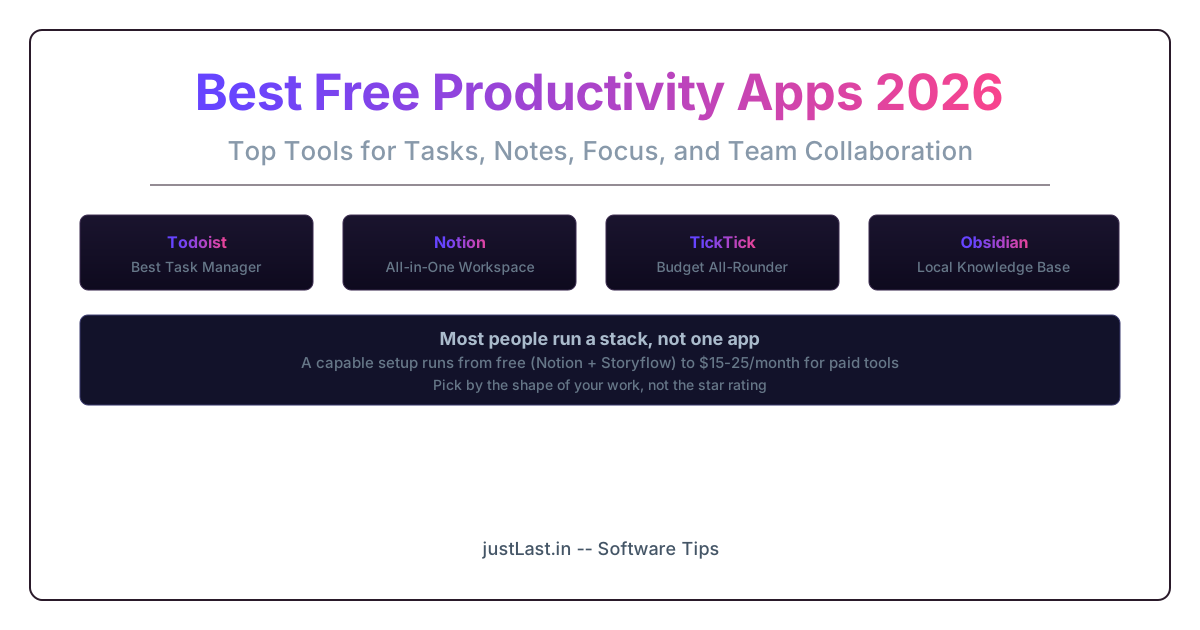
Super Productivity — Task Management
Combines task management, time tracking, timeboxing, and calendar integration. Integrates with GitHub, GitLab, and Jira. Works offline by default with no telemetry.
Vikunja — Todoist Alternative
Self-hosted task manager with a clean interface. Create projects, set due dates, and organize with labels faster than paid tools. Supports priorities, reminders, filters, and team sharing.
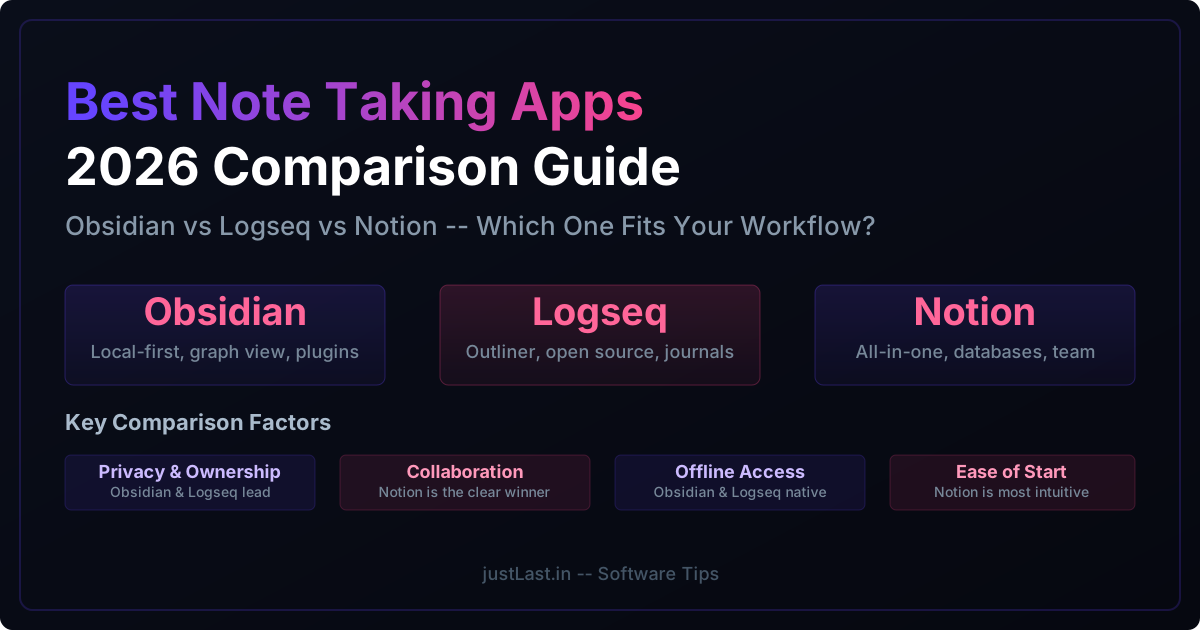
AppFlowy — Notion Alternative
Open-source, privacy-first Notion alternative with responsive block-based editing. Handles databases and Kanban boards without the web-app lag of browser-based tools.
Replacing Your SaaS Stack
Supabase (70k+ stars) — Firebase Alternative
Built on PostgreSQL, auto-generates REST and GraphQL APIs. Row-level security in SQL. Self-hostable via Docker or Kubernetes.
n8n (133k+ stars) — Zapier Alternative
400+ integrations with unlimited executions on self-hosted setups. Cost: $10-20/month VPS vs Zapier’s $69/month for 2,000 tasks.
PostHog (24k+ stars) — Mixpanel, Amplitude, Hotjar Alternative
Event tracking, session replays, feature flags, and experiments in one platform. Free self-hosted option with generous free cloud tier.
Coolify (30k+ stars) — Heroku Alternative
Self-hosted PaaS. Push code to Git, auto-deploys with SSL. Supports Next.js, React, Docker containers. Cost: $5-10/month VPS vs Heroku’s $25-50/dyno.
Business and Enterprise Tools
ERPNext (30k+ stars) — Salesforce, SAP Alternative
Complete ERP with accounting, CRM, inventory, HR, payroll, and manufacturing — all 100% open source, unlike Odoo’s gated Enterprise edition.
Mattermost (30k+ stars) — Slack Alternative
Threaded messaging with 50+ integrations, mobile apps, voice/video calls, and enterprise security on your infrastructure. Saves ~$4,150/year for a 50-person team.
Plausible (20k+ stars) — Google Analytics Alternative
Privacy-friendly analytics with a script 75x smaller than GA. No cookies, no IP tracking. Dashboard loads in under 1 second.
Developer Tools
Grafana provides open-source observability for metrics, logs, and traces. Metabase serves as an open-source BI tool replacing Tableau and Power BI. Plane (54k+ stars) is an open-source Jira/Linear alternative. Authentik replaces Auth0 and Okta for identity management.
Frequently Asked Questions
Is open-source software really free?
Free to use, modify, and distribute. You may incur hosting costs, but total is typically a fraction of commercial SaaS pricing.
Is open-source software secure?
Thousands of eyes review the code. Vulnerabilities are often patched faster than proprietary software. You are responsible for keeping installations updated.
Can I migrate existing data to open-source tools?
Most tools offer import from popular alternatives. Vikunja imports from Todoist/Trello. Supabase imports from Firebase. PostHog imports from Mixpanel/Amplitude.
Sources
- Best Open-Source Task Management Apps 2026
- Open-Source Tools with Better UI than Paid Apps
- 20 Free Open-Source Tools to Replace Paid SaaS
- Plane — Open Source Jira Alternative