
Key Takeaway: Indian mutual fund AUM has crossed Rs 26 lakh crore with over 9.5 crore SIP accounts, while direct stock investing via discount brokers has also hit record levels. The right choice between SIP mutual funds and direct equity depends on your time commitment, risk tolerance, and investment knowledge. This guide compares both approaches across returns, costs, taxation, convenience, and long-term wealth-building potential to help you decide.
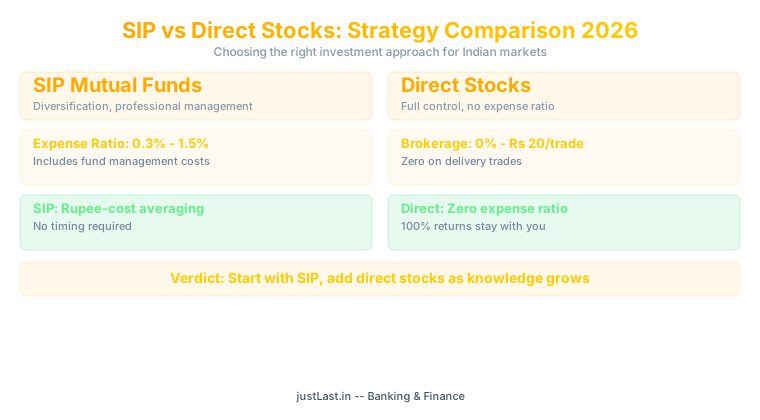
SIP mutual funds India 2026 have become a powerful wealth-building tool for millions of investors. This complete strategy guide compares them against direct stock investing.
Table of Contents
The Great Indian Investment Boom
India’s investment landscape has undergone a dramatic transformation over the past five years. Mutual fund Assets Under Management (AUM) have surged past Rs 26 lakh crore, driven largely by systematic investment plans (SIPs) that now bring in over Rs 2.1 lakh crore in monthly inflows from more than 9.5 crore SIP accounts.
Understanding SIP Mutual Funds
A Systematic Investment Plan allows you to invest a fixed amount in a mutual fund scheme at regular intervals. The key advantage is rupee-cost averaging.
Understanding Direct Stock Investing
Direct stock investing means buying shares of individual companies through a stockbroker. You own the shares directly and make all buy/sell decisions yourself.
Head-to-Head Comparison
Returns and Costs
The expense ratio of a mutual fund directly reduces your returns. An actively managed fund with a 1.2 percent expense ratio means you effectively lose 1.2 percent every year.
Diversification and Risk
A single mutual fund SIP gives you instant diversification across 30 to 100+ stocks. With direct stocks, you need 20-30 companies for similar diversification.
Time and Effort Required
SIP investing requires minimal effort. Direct stock investing demands regular research commitment.
Tax Implications
LTCG above Rs 1.25 lakh held over 12 months is taxed at 10 percent. STCG within 12 months is taxed at 15 percent.
Behavioral Aspects
SIPs remove emotion from investing by running automatically regardless of market conditions.
When to Choose SIP Mutual Funds
SIP mutual funds are the better choice if you are a first-time investor with limited market knowledge or can invest only Rs 500 to Rs 5,000 per month.
When to Choose Direct Stocks
Direct stock investing works better if you have time to research companies and can build a diversified portfolio of 15-20 stocks.
FAQ
Can I lose money in SIP mutual funds?
Yes, SIP mutual funds are market-linked and can decline in value.
What is the minimum amount for a SIP?
Most mutual funds allow SIPs from Rs 500 per month.
Do I need a demat account for mutual fund SIP?
No, you can invest directly through the Asset Management Company.