Key Takeaway: The Pinecil V2 dominates the portable soldering iron market at $26, while the Hakko FX-888D remains the gold standard for dedicated bench stations — your choice depends on whether you value portability or heat recovery speed.
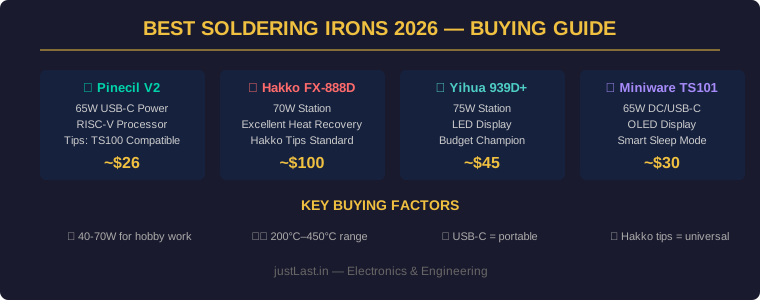
Table of Contents
1. Why Your Soldering Iron Matters
If you’re building ESP32 home automation projects or working on PCB assembly, your soldering iron is the single most important tool on your bench. A cheap, poorly controlled iron leads to cold joints, lifted pads, and frustrated hours. A good one? Clean joints in seconds.
The soldering iron market has evolved dramatically since 2020. USB-C powered portable irons like the Pinecil have disrupted the market, offering 65W of power from a laptop charger. Meanwhile, traditional stations from Hakko and Weller continue to dominate professional workshops with superior heat recovery and tip longevity.
2. Types of Soldering Irons
Before choosing a specific model, understand the three main categories:
Station-Type Soldering Irons
Dedicated power units with a separate iron handle. Examples: Hakko FX-888D, Weller WE 1010. These offer the best temperature stability, rapid heat recovery, and wide tip selection. Ideal for electronics workshops and production environments.
Portable Smart Irons
Compact, USB-C or DC powered irons with built-in OLED displays and programmable firmware. Examples: Pinecil V2, TS101, TS80P. Perfect for field work, maker spaces, and hobbyists who want quality without a bulky station.
Traditional Corded Irons
Basic plug-and-heat irons without temperature control or with a simple dial. The Weller WLC100 and similar models. Fine for occasional use but not recommended for modern SMD work or PCB design projects.
3. Top 5 Soldering Irons for 2026
1. Pinecil V2 — Best Overall Value
The Pinecil V2 is the iron that changed everything. Powered by a RISC-V processor, it runs open-source firmware (IronOS) with features that rival $150+ stations: programmable temperature profiles, USB-C PD power negotiation, sleep modes, and over 25 tip compatibility options.
- Power: 65W (USB-C PD or DC barrel)
- Temp range: 100°C–420°C
- Heat-up time: ~6 seconds to 350°C
- Weight: 18g (iron only)
- Price: ~$26
2. Hakko FX-888D — Best Station
The Hakko FX-888D has been the industry benchmark for over a decade. Its ceramic heating element delivers exceptional heat recovery — when the tip touches a large ground plane, it recovers to temperature in under 3 seconds. The Hakko T18 tip system offers dozens of shapes and sizes.
- Power: 70W
- Temp range: 200°C–480°C
- Heat recovery: Best-in-class
- Weight: Station: 1.2kg, Iron: 65g
- Price: ~$100
3. Miniware TS101 — Best Portable
The TS101 improves on the legendary TS100 with USB-C PD support and a larger OLED display. Its smart firmware detects tip type and auto-calibrates. Dual power input (USB-C + DC5521) makes it extremely versatile for both bench and field work.
- Power: 65W
- Temp range: 100°C–430°C
- Display: OLED
- Weight: 25g
- Price: ~$30
4. Yihua 939D+ — Best Budget Station
For those who want a station but can’t justify $100+, the Yihua 939D+ delivers solid performance at a fraction of the cost. Ceramic heating element, digital temperature display, and included tip set make it a complete package for beginners.
- Power: 75W
- Temp range: 150°C–450°C
- Display: LED
- Includes: 3 tips, desoldering pump, stand
- Price: ~$45
5. JBC CD-2BE — Professional Choice
If budget isn’t a concern, JBC makes the finest soldering equipment in the world. The CD-2BE features JBC’s patented heating system that reaches 350°C in under 5 seconds with unmatched thermal performance. Used in aerospace and medical electronics manufacturing.
- Power: 130W
- Temp range: 90°C–450°C
- Heat-up: Under 5 seconds
- Price: ~$350
4. Head-to-Head Comparison Table
| Feature | Pinecil V2 | Hakko FX-888D | TS101 | Yihua 939D+ | JBC CD-2BE |
|---|---|---|---|---|---|
| Price | $26 | $100 | $30 | $45 | $350 |
| Power | 65W | 70W | 65W | 75W | 130W |
| Heat Recovery | Good | Excellent | Good | Fair | Best-in-class |
| Portability | ⭐⭐⭐⭐⭐ | ⭐⭐ | ⭐⭐⭐⭐⭐ | ⭐⭐ | ⭐⭐ |
| Tip Ecosystem | TS100 compat | T18 (huge) | TS100 compat | 900M compat | JBC C-series |
| Best For | All-rounders | Bench work | Field work | Budget starter | Professional |
5. Buying Guide: What to Look For
Wattage and Heat Recovery
For through-hole components and basic PCB work, 40W is sufficient. For SMD work, large ground planes, or lead-free solder (which requires higher temps), aim for 60W+. Heat recovery — how fast the tip returns to temperature after touching a joint — matters more than raw wattage for consistent results.
Temperature Control
Non-negotiable. Any iron without adjustable temperature control is unsuitable for modern electronics. Lead-free solder melts at 217°C vs. 183°C for leaded, and different components have different thermal limits. PID-controlled temperature regulation ensures consistent joints.
Tip Compatibility
Check what tip ecosystem the iron uses. Hakko T18 tips are the most widely available globally. The TS100/Pinecil ecosystem has grown significantly. Proprietary tips (like JBC) are expensive but unmatched in quality.
Power Source
USB-C PD irons offer incredible portability — power from a laptop charger, power bank, or car adapter. Station-type irons need dedicated AC power. If you work in multiple locations, USB-C is a game changer.
Firmware and Smart Features
Open-source firmware (IronOS for Pinecil/TS series) means community-driven improvements, custom temperature profiles, and sleep modes that extend tip life. Closed-source stations rely on the manufacturer for updates.
6. Soldering Tips for Beginners
Getting the right iron is step one. Using it properly is step two:
- Tin the tip before every joint — apply fresh solder to the tip, wipe on brass wool, then solder
- Use flux — even with flux-core solder, adding extra flux dramatically improves joint quality
- Don’t hold heat too long — 2-3 seconds per joint maximum to avoid component damage
- Clean regularly — use brass wool (not wet sponges) to preserve tip plating
- Use the right tip shape — chisel tips for through-hole, conical or knife tips for SMD
- Invest in good solder — Kester 44 (leaded) or MG Chemicals 4900 (lead-free) are excellent choices
Frequently Asked Questions
What temperature should I set my soldering iron to?
For leaded solder (63/37 Sn/Pb), set your iron to 320°C–350°C. For lead-free solder (SAC305), use 350°C–380°C. The exact temperature depends on tip size, thermal mass of the joint, and how quickly you work. Start at 350°C and adjust based on results.
Can I use a USB-C soldering iron for professional work?
Absolutely. The Pinecil V2 and TS101 at 65W deliver enough power for most electronics work including SMD assembly. Professional assembly lines still prefer stations for continuous use, but for prototyping, small-batch production, and field repair, USB-C irons are more than adequate.
How often should I replace soldering iron tips?
With proper care (tinning, using brass wool, avoiding over-temperature), a good tip lasts 6-12 months of regular use. Hakko T18 tips typically outlast cheaper alternatives. If the tip becomes pitted, oxidized, or won’t hold solder, it’s time to replace it.
Is leaded or lead-free solder better for beginners?
Leaded solder (60/40 or 63/37) is easier to work with — lower melting point, better wetting, and shinier joints. Lead-free solder is required for commercial products (RoHS compliance) but harder to learn on. Start with leaded for learning, switch to lead-free for production.
What’s the difference between a soldering iron and a soldering station?
A soldering iron is the handheld heating tool itself. A soldering station includes a base unit with precise temperature control, display, sleep functionality, and often better heat recovery. Stations cost more but offer superior temperature stability for extended work sessions.
Related Reading
- DIY PCB Design Guide for Beginners
- Best ESP32 Projects for Home Automation
- How to Build a Custom Arduino Shield
Sources
- Pine64 — Pinecil Wiki & Documentation
- Hakko — FX-888D Product Page
- IronOS — Open Source Firmware for Smart Soldering Irons
- Miniware — TS101 Specifications
- JBC Soldering — Professional Solutions
Disclosure: This post contains affiliate links. As an Amazon Associate I earn from qualifying purchases.