Key Takeaway: The Oura Ring 5, released in June 2026, is 40% smaller than its predecessor with upgraded precision sensors, Health Radar features (blood pressure signals, nighttime breathing), live activity tracking for 40+ exercises, and GLP-1 medication insights. Paired with the rapid expansion of continuous glucose monitoring (CGM) technology — including FDA approval of over-the-counter CGM for children and FDA clearance of the Signos weight management CGM system — wearable health monitoring has reached a tipping point where consumers can track sleep, activity, heart health, glucose, and temperature from their wrist or finger 24/7.
📖 Table of Contents
1. Oura Ring 5: What’s New
The Oura Ring 5, announced on June 4, 2026, represents a significant hardware and software upgrade. The most visible change is the size — the Gen 5 ring is 40% smaller than the Gen 4, making it the smallest smart ring on the market. This matters because size has been the primary barrier to adoption for people with smaller fingers and those who found previous generations bulky for nighttime wear.


Beneath the smaller form factor, Oura has upgraded the precision sensors to achieve better skin contact, greater consistency across different finger types and skin tones, and improved accuracy. The ring now has 18 signal pathways across its sensors, providing more data points per measurement.
On the software side, the Health Radar feature adds blood pressure signal monitoring and nighttime breathing disturbance detection alongside existing capabilities. Live activity tracking allows users to start workouts directly in the app and view real-time metrics, with automatic detection improved for 40+ activities including low-motion workouts like yoga and Pilates.
Perhaps the most innovative addition is GLP-1 insights. For users taking GLP-1 medications for weight management or type 2 diabetes, the Oura Ring 5 provides a longitudinal view of dosing, side effects, and weight changes alongside biometric data. This integration of medication tracking with continuous health monitoring is a glimpse of where consumer health wearables are headed.
The Oura Ring 5 health monitoring system tracks over 50 metrics including heart rate, heart rate variability (HRV), body temperature, SpO2, sleep stages, respiratory rate, and menstrual cycles. Battery life remains 6-9 days per charge, with a full charge taking 20-80 minutes. The ring is waterproof to 100 meters. Pricing starts at $399.

2. Health Metrics and Accuracy
The Oura Ring 5 generates three daily scores: Sleep Score, Readiness Score, and Activity Score. Each aggregates multiple underlying metrics into a 0-100 scale that provides an at-a-glance health assessment.
Sleep tracking is where Oura has historically excelled, and the Gen 5 continues this leadership. The ring uses a combination of photoplethysmography (PPG) for heart rate, actigraphy for movement, and skin temperature sensors to detect sleep stages — light, deep, REM — with accuracy comparable to clinical polysomnography in published studies.
Heart rate variability (HRV) tracking is particularly valuable. HRV reflects the balance between your sympathetic (fight-or-flight) and parasympathetic (rest-and-digest) nervous systems. Low HRV correlates with stress, overtraining, and poor recovery. The Oura Ring 5’s nighttime HRV measurements are validated against medical-grade ECG with strong correlation.
Body temperature sensing uses seven NTC temperature sensors with an advanced calibrated sensor. This enables period prediction, menstrual cycle visualization, and early illness detection. Many users report the ring detecting elevated temperature 24-48 hours before symptoms appear.
Blood oxygen (SpO2) monitoring provides nighttime breathing disturbance data. Low SpO2 or frequent desaturations can indicate sleep apnea, prompting users to seek clinical evaluation.
3. The CGM Integration Revolution
2026 has been a landmark year for continuous glucose monitoring (CGM), and this significantly enhances the Oura Ring 5 health monitoring ecosystem. While Oura does not directly measure glucose, its GLP-1 insights feature creates a unified dashboard for users who wear both a CGM sensor and the Oura Ring.
The FDA approved the first over-the-counter continuous glucose monitor for children ages 2 to 18 with diabetes in June 2026. The Stelo Glucose Biosensor System by Dexcom is designed for children who receive oral medication (not insulin) and can also be used by parents who want to understand how diet and exercise affect glucose levels.
Dexcom’s G7 system now offers direct-to-watch connectivity — meaning the sensor can stream glucose data directly to a compatible smartwatch without a phone intermediary. This is a significant advancement for real-time diabetes management.
The FDA also cleared the first-ever glucose monitoring system specifically designed for weight management from startup Signos. The system pairs a Dexcom continuous glucose monitor with an AI platform that provides personalized lifestyle recommendations, targeting people managing their weight with or without GLP-1 medications or bariatric surgery.
Other CGM developments include Medtronic’s Minimed Mobile app integration with smartwatches and Abbott’s Freestyle Libre 3 CGM technology working with various watches and third-party apps. The #WeAreNotWaiting movement that began with DIY diabetes tech in 2013 has evolved into an industry-wide push for open, interoperable health data.
4. Smart Ring vs Smartwatch vs Fitness Band
Each wearable form factor has distinct strengths:
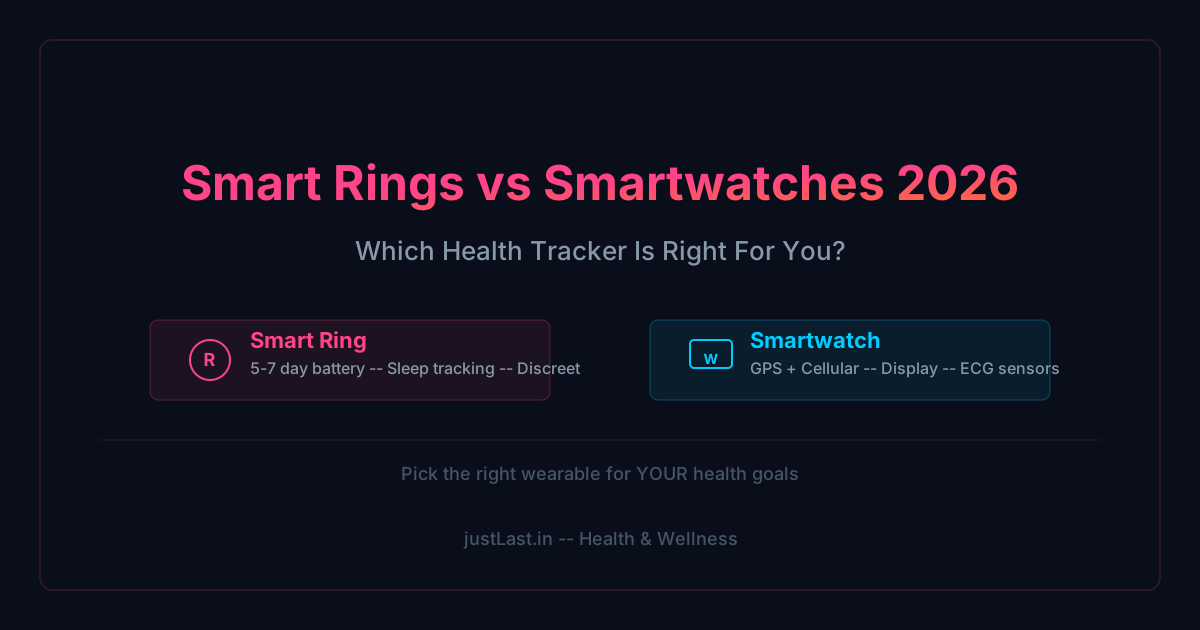
Smart rings (Oura, Circular, Evie): Best for sleep tracking and 24/7 wear. Rings are unobtrusive, comfortable for sleeping, and don’t require charging as frequently. Oura’s temperature sensing and HRV accuracy lead the category. The trade-off is no display, no GPS, and limited real-time feedback during workouts.
Smartwatches (Apple Watch, Samsung Galaxy Watch): Best for active use and app ecosystems. Watches offer GPS, cellular connectivity, app stores, and screens for real-time data. The Apple Watch offers ECG, blood oxygen, and fall detection. The Galaxy Watch now offers blood pressure monitoring (with monthly cuff calibration). Battery life of 1-2 days is the primary limitation.
Fitness bands (Fitbit, Whoop): Best for dedicated fitness tracking. Whoop’s 14+ day battery and strain/recovery model are excellent for athletes. Fitbit offers strong value at lower price points. The trade-off is less sophisticated sleep analysis and fewer smart features.
Many health-conscious users are adopting a dual-wearable strategy — a smart ring for sleep and recovery monitoring plus a smartwatch for workouts and daily notifications. This combination provides the best of both worlds: continuous, unobtrusive health data with on-demand functionality.
5. Who Should Buy a Smart Ring in 2026
A smart ring is ideal for users who prioritize sleep health and recovery data but find wrist-worn wearables uncomfortable for sleeping. It is also excellent for people who want continuous health monitoring without the social friction of looking at a watch screen — the ring provides data without demanding attention.
For athletes, the combination of Oura’s recovery data with Whoop’s strain tracking or a Garmin’s GPS workout features provides comprehensive training insights. For people managing chronic conditions like diabetes, the integration of CGM data with Oura’s biometric context creates a more complete health picture than either device alone.
At $399 plus a $6/month membership (after the first month free), the Oura Ring 5 is a significant investment. However, for users serious about understanding their sleep, recovery, and overall health patterns, the data quality and actionable insights justify the cost.
Frequently Asked Questions
How accurate is the Oura Ring 5 compared to medical devices?
Oura Ring 5’s heart rate, HRV, and temperature measurements show strong correlation with clinical-grade devices in published validation studies. However, Oura explicitly states the ring is not a medical device — it identifies trends and patterns, not diagnoses.
Does the Oura Ring 5 measure blood glucose?
No. The ring does not directly measure glucose. The GLP-1 insights feature integrates data from CGM devices and user-input medication logs to provide a unified health dashboard.
Can I wear Oura Ring 5 while swimming?
Yes. The ring is waterproof to 100 meters and tracks swim workouts automatically as part of the 40+ supported activity types.
How does Oura compare to Whoop 5.0?
Oura excels in sleep tracking and temperature sensing with a smaller, ring form factor. Whoop offers longer battery life (14+ days), a band form factor with more textile options, and detailed strain/recovery models. Both require monthly subscriptions. Choose Oura for sleep and convenience; choose Whoop for sports performance tracking.
Is the $6/month membership mandatory?
Yes, after the first month free. The membership provides daily scores, trend analysis, readiness recommendations, and Health Radar features. Without membership, the ring provides only basic activity tracking.
Related Reading
Sources
- Oura Ring 5 New Features — Healthline
- Smartwatches and Diabetes Monitoring — Healthline
- FDA Approves OTC CGM for Kids — Healthline
- Signos CGM for Weight Loss — Healthline
- Oura Ring Specs, Review, and FAQs — Healthline
Disclosure: Some links in this article are affiliate links. We may earn a commission if you purchase through these links at no additional cost to you.