Key Takeaway: India’s smart wearable market reached $2.94 billion in 2025, with 57% adoption among consumers. By 2031, the market is projected to exceed $10 billion. AI-powered wearables now offer ECG monitoring, continuous glucose tracking, and atrial fibrillation detection with over 96% accuracy — but accuracy gaps on darker skin tones and data privacy concerns remain critical issues for Indian users.
AI Wearables in India 2026: From Fitness Tracking to Preventive Healthcare
Market Size (2025)
$2.94B
32M smartwatches shipped
Projected 2031
$10B+
15%+ CAGR growth
India Health Burden
27% | 77M
Cardiac deaths | Diabetes patients
PPG Heart Rate Sensor
LED + optical sensor tracks
blood flow, heart rate, SpO2
ECG Monitoring
Detects atrial fibrillation
96%+ accuracy in studies
CGM Glucose Monitoring
24-hour glucose tracking
Reduces HbA1c substantially
Indian Context: Unique Challenges
Darker skin tones: PPG accuracy varies | Data privacy: DPDPA 2023 lacks health data definitions
AI training bias: Models trained on Western data | ABDM integration enables clinical sharing
Price Range: Rs 3,000 basic to Rs 40,000+ clinical-grade | 57% adoption in India | Avg selling price Rs 4,400
Sources: The Hindu BusinessLine, Convergence Now, Mobility India, ESKAG Sanjeevani, DailyHunt/Medicircle
Basic: Rs 3K-8K
Mid: Rs 10K-25K (ECG, BP)
Premium: Rs 40K+ (FDA-cleared)
India adoption: 57% globally
Data: Counterpoint Research, IDC, Industry reports. Wearables reduce hospital costs via remote monitoring.
The Indian Wearable Market Landscape
India’s relationship with wearable technology is distinctive. According to global wearable ownership data, adoption in India stands at 57% — among the highest in the world. The country’s wearable medical device market is expected to grow from approximately Rs 9,256 crore in 2024 to Rs 37,380 crore by 2033, reflecting a compound annual growth rate of over 15%.
This growth is not just about gadgets. It signals a broader shift towards preventive, data-informed healthcare in a country that carries a heavy burden of chronic disease. Cardiovascular disease causes 27% of all deaths in India, and over 77 million Indians live with diabetes, yet most people visit a doctor only after symptoms have already progressed.
Smartwatches ranging from Rs 1,000 to Rs 1 lakh and smart rings from Rs 1,000 to Rs 40,000 are the most popular wearable form factors. The average selling price of consumer wearables was Rs 4,400 in 2025, with approximately 1.14 lakh wearable devices worth $3 billion shipped to India that year.
Sensor Technology: How AI Wearables Track Your Health
A basic fitness tracker counts steps. An AI wearable continuously collects biological signals, processes them through machine learning, and converts raw data into real-time health insights. Understanding the technology helps you choose the right device and use it safely.
Photoplethysmography (PPG): A green LED measures blood flow through your skin to detect heart rate and blood oxygen (SpO2). This is the most common sensor technology in smartwatches. ECG sensors detect the electrical activity of your heartbeat, enabling atrial fibrillation detection. Accelerometers track movement intensity, physical activity levels, and detect falls. Skin temperature sensors can flag fever, infection, and hormonal cycle changes. Continuous Glucose Monitors (CGMs) are medical-grade arm sensors that track interstitial glucose levels in real time.
AI algorithms learn your personal baseline — what is normal for your body, not a population average. Deviations from that baseline are flagged as potential health concerns, often before any symptom appears. Processing runs across two layers: Edge AI on the device for instant alerts, and Cloud AI for long-term trend analysis and risk scoring.
Clinical Evidence: What the Science Says
ECG-capable smartwatches can detect atrial fibrillation in patients with no symptoms whatsoever, dramatically reducing stroke risk through early intervention. Research has shown that AI models analysing smartwatch data can identify cardiac risk signals with over 96% accuracy. One controlled study found AI-assisted smartwatch monitoring reduced systolic blood pressure by 3.8 mmHg, a clinically meaningful outcome.
Continuous glucose monitors deliver real-time glucose data across the full 24-hour cycle, including nocturnal hypoglycemia events that patients would otherwise never detect. The landmark DIAMOND randomised controlled trial demonstrated that CGM use substantially reduces HbA1c in patients with Type 1 diabetes. For India’s enormous diabetes burden, this means fewer complications and a decisive shift from reactive to proactive disease management.
The Smart Ring Revolution in India
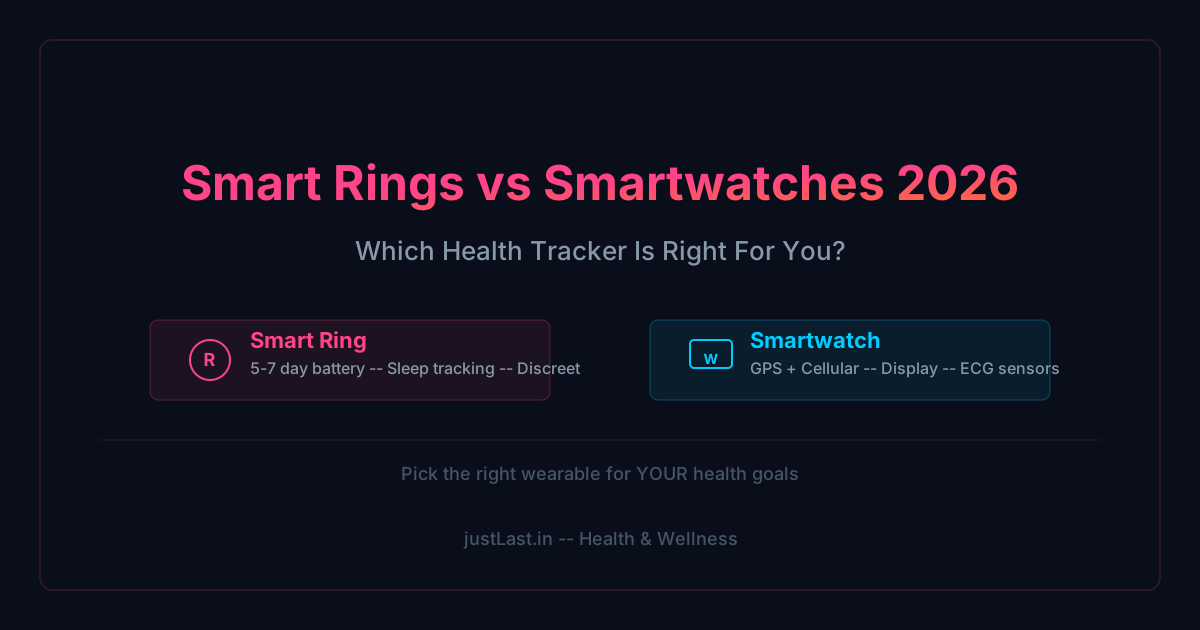
Smart rings are carving a distinct niche in the Indian wearable market. Unlike smartwatches, they lack screens, buttons, and constant alerts. Instead, they focus on passive, continuous health monitoring — sleep stages, heart rate trends, blood oxygen levels, and recovery scores — without demanding attention throughout the day.
Finnish health-tech company Oura launched its Oura Ring 4 in India, tracking sleep and over 50 wellness indicators. Indian brands like Ultrahuman and Noise are aggressively positioning smart rings with competitive pricing and, in some cases, no subscription fees. The minimalist, unobtrusive design offers better sleep data through consistent overnight wear, less distraction during work or social settings, and a design that aligns with everyday fashion.
Industry data from 2025 showed the overall wearable market contracting even as smart rings continued modest growth, a sign that consumer interest is broadening beyond wrist-mounted devices. Many consumers are expected to adopt both: smartwatches for interactive tasks and workouts, smart rings for long-term health tracking.
Important Considerations for Indian Users
Accuracy on darker skin tones: PPG optical sensors work by shining light through your skin to measure blood flow. Melanin, present in higher concentrations in darker skin types common across India, absorbs the same wavelengths, making heart rate and SpO2 readings measurably less accurate. A 2025 study of 17 leading wearable manufacturers found that two of the most popular brands in India carried the highest cumulative data privacy risk scores.
Data privacy: Wearables continuously collect data and generate profiles of individuals. Even anonymised data can be re-identified with longitudinal biometric data. Health data is often shared with app developers, cloud service providers, and ad tech companies. India’s Digital Personal Data Protection Act (DPDPA), 2023, does not define health data or lay down standards for anonymisation, leaving a significant regulatory gap.
AI training bias: Most wearable AI algorithms were trained predominantly on datasets from Western countries skewed toward lighter-skinned populations. Until manufacturers train their models on diverse global datasets, treat AI health alerts as signals that require clinical verification, not as standalone diagnoses.
Integration with India’s Digital Health Infrastructure
India’s Ayushman Bharat Digital Mission (ABDM) allows supported wearables to sync health data directly with your Ayushman Bharat Health Account. This makes continuous monitoring data securely accessible to treating physicians during consultations and telemedicine sessions. ABDM compatibility is a valuable feature to verify before purchasing, as it significantly amplifies the clinical value of your wearable device.
Remote patient monitoring is gaining ground through ABDM, enabling hospitals to use wearable data for post-discharge tracking, chronic condition management, and early intervention when concerning trends emerge. This is particularly valuable in India, where post-discharge follow-up can be inconsistent due to distance, cost, or limited specialist availability.
Choosing the Right Device
For basic wellness and activity tracking, devices in the Rs 3,000 to Rs 8,000 range from boAt, Noise, and Fastrack offer heart rate, step tracking, and sleep monitoring. For ECG monitoring and blood pressure tracking, the Rs 10,000 to Rs 25,000 range including Samsung Galaxy Watch FE and Garmin devices provides more clinical capability. For FDA-cleared ECG and advanced AI health insights, premium options like Apple Watch Series 11 and Ultrahuman Ring Air at Rs 40,000+ deliver clinical-grade monitoring.
Cardiac patients specifically need ECG capability. People with diabetes need a prescribed CGM — the wrong device creates dangerous false reassurance. For elderly patients, devices with fall detection, heart rate monitoring, and emergency alert features provide the most practical safety benefits.
Frequently Asked Questions
Are smartwatch health readings accurate enough for medical use?
Consumer wearables should be treated as indicative rather than diagnostic. Devices with FDA clearance for specific features like ECG offer more clinically reliable data, but all readings should support, not replace, a doctor’s assessment.
What is the best health wearable for Indian users?
The best device depends on your health needs. For basic tracking, boAt and Noise offer good value. For clinical features like ECG, consider Samsung Galaxy Watch or Apple Watch. For diabetes management, a prescribed CGM is essential.
Is my health data safe on wearables?
Data privacy is a genuine concern. Read privacy policies carefully. Many manufacturers share data with third parties. India’s DPDPA 2023 is still evolving, and health data protections remain limited compared to GDPR in Europe.
Can wearables integrate with Indian healthcare?
Yes. ABDM-compatible wearables can sync with your Ayushman Bharat Health Account, making data accessible to physicians during consultations.
What is the future of AI wearables in India?
The market is projected to exceed $10 billion by 2031, driven by sensor miniaturisation, 5G connectivity, and AI-powered predictive health analytics moving from reactive tracking to proactive assistance.
Related Reading
- Google SensorFM: The Trillion-Minute Foundation Model Making Wearable Health Truly Predictive
- Edge AI in Industrial IoT 2026
Sources
- The Hindu BusinessLine – Wearable Tech: Health Monitors on the Go
- Convergence Now – Smart Rings vs Smartwatches India 2026
- Mobility India – AI-Powered Smartwatches
- ESKAG Sanjeevani – AI Wearables Health Tracking India Guide
- Medicircle – Wearable Health Devices in India
Disclosure: Some links in this article are affiliate links. We may earn a commission if you make a purchase through these links, at no additional cost to you.