Key Takeaway: There is no single best smart home protocol in 2026 — Wi-Fi suits cameras and hubs, Zigbee is the affordable mesh workhorse for sensors and bulbs, Z-Wave wins on reliability, and Matter is the future-proof cross-brand standard. Most good smart homes combine two.
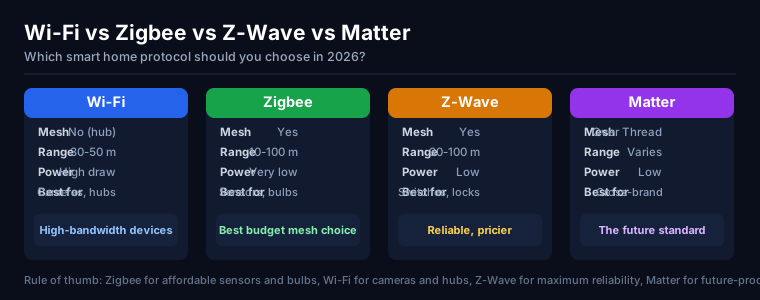
Table of Contents
1. Overview
If you have ever tried to set up a smart home, you have hit the same wall: your smart bulb speaks Zigbee, your smart plug uses Wi-Fi, your lock wants Z-Wave, and the new gadget promises “Matter ready”. Each protocol has its own radio, its own hub requirements, and its own trade-offs between range, power, and price. Understanding smart home protocols is the single most important decision you make before buying anything, because it determines which devices can talk to each other — and whether you need a hub at all.
This guide compares the four smart home protocols that dominate the 2026 market, scores them for Indian homes, and gives you a practical buying framework so you do not waste money on a hub you do not need or devices that cannot talk to each other.
2. Wi-Fi vs Zigbee vs Z-Wave vs Matter: Full Comparison
Here is the comparison table that matters. Prices are typical for the Indian market in 2026.
| Feature | Wi-Fi | Zigbee | Z-Wave | Matter (over Thread) |
|---|---|---|---|---|
| Radio band | 2.4 / 5 GHz | 2.4 GHz | 800-900 MHz | 2.4 GHz (Thread) / Wi-Fi / BLE |
| Mesh networking | No | Yes | Yes | Yes (Thread) |
| Typical range | 30-50 m | 10-100 m per hop | 30-100 m per hop | 10-30 m per hop |
| Power draw | High | Very low | Low | Low |
| Hub required | No | Yes | Yes | Border router |
| Interference risk | High (congested) | Moderate | Low | Low |
| Device price (India) | Rs 300-3,000 | Rs 400-2,500 | Rs 1,500-6,000 | Rs 800-4,000 |
| Best for | Cameras, hubs, TVs | Bulbs, sensors, plugs | Switches, locks, reliable mesh | Cross-brand future-proofing |
Wi-Fi: zero hub, but crowded
Wi-Fi devices connect directly to your router — no hub, no extra radio, just an app. That makes Wi-Fi the easiest protocol to start with, and it is the only practical choice for bandwidth-hungry devices like security cameras, video doorbells, and smart speakers. The downside is real in Indian homes: the 2.4 GHz band is crowded, every Wi-Fi device competes for your router’s attention, and always-on Wi-Fi radios drain batteries fast. When 15 smart plugs are all hammering your router, latency creeps up and your Wi-Fi network slows for phones and laptops too.
Zigbee: the affordable mesh workhorse
Zigbee is a low-power mesh protocol. Every plugged-in Zigbee device acts as a repeater, so a budget smart plug extends the network to sensors in far corners of a house that Wi-Fi cannot reach. Zigbee devices draw a fraction of the power of Wi-Fi — a battery door sensor can run for two years. Its biggest practical advantage in India is price: Zigbee bulbs and sensors are dramatically cheaper than Z-Wave equivalents, and hubs like the Tuya/Smart Life ecosystem or Home Assistant make them easy to manage. The catch: you need a Zigbee hub or a Zigbee-capable voice assistant speaker to talk to them, and cheap “Zigbee” clones sometimes have compatibility quirks.
Z-Wave: reliable and secure, but pricier
Z-Wave operates in the 800-900 MHz band, well away from the crowded 2.4 GHz Wi-Fi spectrum. That gives it outstanding reliability in dense apartments, and its strict certification program means Z-Wave devices from different brands interoperate cleanly. Z-Wave is the favourite of security-conscious installers — locks, switches, and alarm sensors — because it simply does not drop. The trade-offs are price (Z-Wave devices cost roughly double equivalent Zigbee devices) and availability in India, where the range is thinner than Zigbee or Wi-Fi.
Matter: the future-proof standard
Matter, launched by the Connectivity Standards Alliance (Apple, Google, Amazon, Samsung), is not a new radio — it is a common application layer that lets Thread, Wi-Fi, and Bluetooth devices talk to each other regardless of brand or voice assistant. Buy a Matter-certified switch and it works with Alexa, Google Home, and Apple Home without separate setup. Matter over Thread adds a low-power mesh radio similar to Zigbee but with a simpler, more consistent experience. In 2026 Matter support is now standard on most new hubs and speakers, making it the safest bet for devices you want to keep for years. The main caveat: the Matter ecosystem is still consolidating, and older devices will never receive the upgrade.
3. Which Protocol Should You Choose?
Start with Wi-Fi if you want simplicity
- You want a setup that works with zero extra hardware.
- Most of your devices are cameras, speakers, plugs, and lights with Wi-Fi built in.
- You are comfortable with one app per brand (or one central app like Smart Life).
Add Zigbee for sensors, bulbs, and coverage
- You are building a sensor network for doors, motion, temperature, and lights.
- You want the best price-to-performance ratio for bulbs and plugs.
- You already have — or are willing to buy — a Zigbee hub or a hub-capable voice assistant speaker.
- Our best smart plugs guide covers affordable Zigbee and Wi-Fi options side by side.
Choose Z-Wave for maximum reliability and security devices
- You are installing smart locks, alarm sensors, or critical switches.
- You live in a dense apartment building where 2.4 GHz congestion is a real problem.
- Reliability matters more to you than price.
Prefer Matter-certified devices for the long term
- You are starting fresh in 2026 and want devices that still work in 2030.
- You use more than one voice assistant (Alexa plus Google Home) and hate being locked in.
- You want a single, consistent setup experience across brands.
For most Indian smart homes in 2026, the best value formula among smart home protocols is Wi-Fi for cameras and hubs + Zigbee for bulbs and sensors, with Matter-certified devices preferred whenever the price is close. That combination keeps your network fast, your costs low, and your options open. If you want to build a complete DIY system on a budget, our ESPHome smart sensor network guide shows the full build.
4. Frequently Asked Questions
Is Zigbee better than Wi-Fi for smart home?
For battery-powered sensors and low-power devices like bulbs and plugs, yes — Zigbee uses far less power, forms a mesh, and does not crowd your router. For bandwidth-heavy devices like security cameras, Wi-Fi is better because Zigbee cannot stream video.
Does Zigbee work without a hub?
No. Zigbee devices need a Zigbee coordinator — a hub, a bridge, or a hub-capable smart speaker. Many popular options like Tuya hubs, Sonoff hubs, and Alexa Echo devices with Zigbee built in are inexpensive and easy to set up.
Is Z-Wave being replaced by Matter?
Not yet. Matter and Z-Wave are complementary today — Matter solves cross-brand compatibility, while Z-Wave still offers the most battle-tested, congestion-free mesh for security devices. Over time Matter over Thread is expected to absorb much of Z-Wave’s role, but Z-Wave devices remain excellent in 2026.
Do Matter devices need a hub?
Matter over Thread needs a Thread border router (built into most recent smart speakers and hubs), while Matter over Wi-Fi works with just your router. Either way, you will want a controller like Alexa, Google Home, or Apple Home to manage automations.
Can I mix Zigbee, Z-Wave, and Wi-Fi in one home?
Yes — and most advanced smart homes do. A platform like Home Assistant or a hub from a major brand can bridge multiple protocols into a single set of automations. The key is choosing a hub that supports the protocols you plan to use before you buy devices.
Related Reading
- Best Smart Plugs in India 2026: Complete Buying Guide
- ESP32 vs ESP8266: Which IoT Board Should You Choose in 2026?
- ESPHome Smart Sensor Network: Complete DIY Guide
- ESP32 Smart Home Automation Guide 2026
Sources
- Connectivity Standards Alliance — Matter
- CSA — Zigbee
- Z-Wave Alliance
- Home Assistant — Smart Home Protocols Explained
Disclosure: This post contains affiliate links. As an Amazon Associate I earn from qualifying purchases.