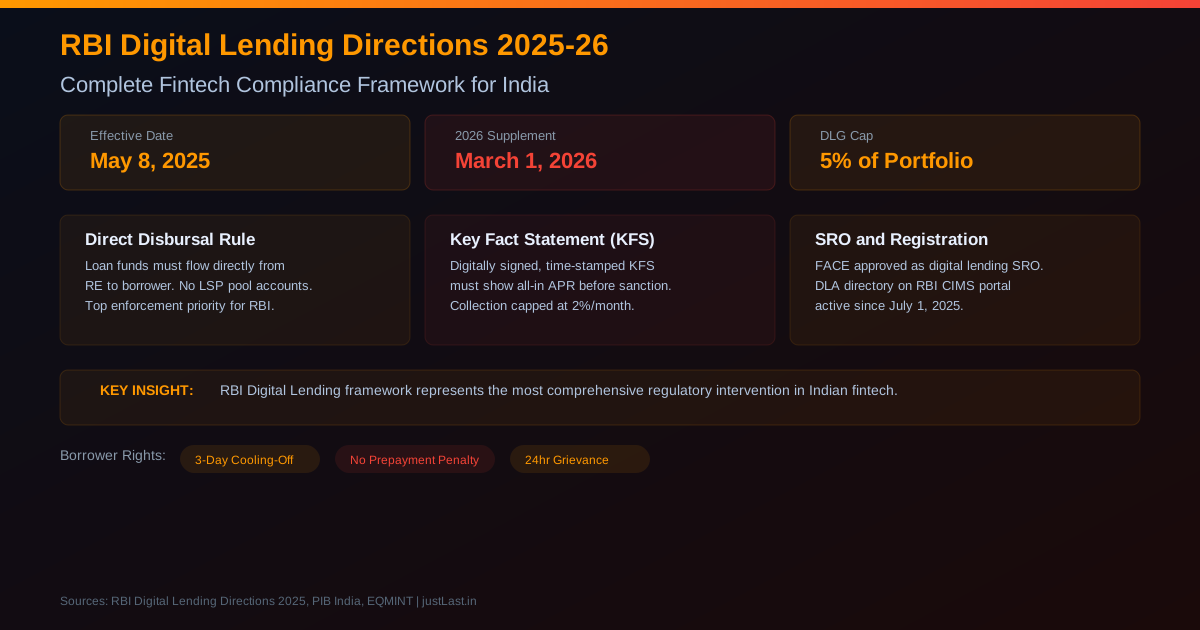
Key Takeaway: The RBI Digital Lending Guidelines 2026 introduce comprehensive fair lending rules, mandatory data localization, and enhanced borrower protection mechanisms that transform how digital lending apps operate in India. Borrowers now have clear rights including transparent APR disclosure, a three-day cooling-off period, mandatory grievance redressal within 30 days, and protection against unauthorized data sharing.
📖 Table of Contents
- 1Overview of RBI Digital Lending Guidelines 2026
- 2Fair Lending Rules: APR Disclosure and Fee Transparency
- 3Data Protection Standards and Consent Framework
- 4Enhanced Borrower Rights and Grievance Redressal
- 5Mandatory RBI Registration for Digital Lending Apps
- 6Compliance Requirements and Penalties
- 7Impact on Borrowers and the Digital Lending Market
- 8Frequently Asked Questions
1. Overview of RBI Digital Lending Guidelines 2026
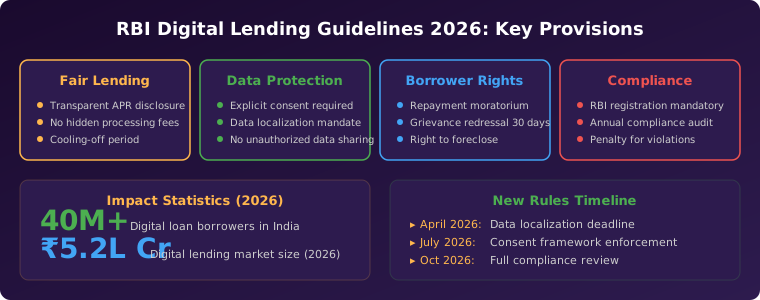
The Reserve Bank of India (RBI) has significantly strengthened its regulatory framework for digital lending in 2026, responding to rapid growth in the sector that now serves over 40 million borrowers and commands a market size exceeding ₹5.2 lakh crore. The new guidelines build upon the earlier Digital Lending Working Group recommendations and the 2022 circular, introducing stricter compliance requirements that directly affect every digital lending app operating in India.
These guidelines represent the RBI’s most comprehensive regulatory intervention in the digital lending space to date. They cover the entire lifecycle of a digital loan — from customer acquisition and data collection through loan disbursement, repayment, and grievance handling. The key driving force behind these rules has been the surge in complaints about unethical recovery practices, hidden fees, and data misuse by unregulated lending apps.
2. Fair Lending Rules: APR Disclosure and Fee Transparency
The most impactful change for borrowers is the mandatory disclosure of the All-inclusive Cost of Credit (APR). Every digital lending app must now display the APR prominently before loan confirmation, including all interest, processing fees, GST, and any other charges. Hidden fees have been explicitly banned.
The cooling-off period provision gives borrowers the right to cancel a loan within three days of disbursement without penalty. During this period, the borrower can return the principal amount, and the lender must cancel the loan with zero charges. This protects against impulsive borrowing and gives consumers time to review loan terms.
Late payment penalties are now capped at 2% per month of the overdue amount, preventing the compounding of excessive penalty fees that many digital lending apps previously charged. All lending apps must clearly display their late payment policy on the loan summary page.
3. Data Protection Standards and Consent Framework
The RBI has implemented a strict consent framework for data collection by digital lending apps. The new rules require explicit, granular consent for every type of data collected. Borrowers must be informed about what data is collected, why it is needed, how it will be used, and with whom it may be shared. Blanket consent for accessing phone contacts, photos, and SMS is now illegal.
Data localization is a central requirement: all borrower data must be stored on servers located within India. Digital lending apps cannot transfer borrower data outside the country without explicit RBI approval. This requirement, which came into full effect in April 2026, aims to prevent the misuse of Indian borrower data by foreign entities.
The guidelines also require lenders to implement data minimization practices. Only data directly necessary for credit assessment and loan servicing can be collected. Access to phone contacts, call logs, SMS, and device files is prohibited unless the borrower explicitly consents for a specific, disclosed purpose.
4. Enhanced Borrower Rights and Grievance Redressal
Every digital lending app regulated by RBI must now have a registered grievance redressal officer. Complaints must be acknowledged within 24 hours and resolved within 30 days. If the borrower is not satisfied with the resolution, they can escalate to the RBI’s ombudsman scheme for digital lending.
Borrowers now have the explicit right to prepayment or foreclosure of loans without any penalty. This applies to all floating-rate loans and any loan where the interest rate changes during the tenure. The guidelines also mandate that lenders must provide a clear repayment schedule in the borrower’s preferred language.
The right to be forgotten in the context of loan rejection has been introduced. If a loan application is rejected, the lender must delete all borrower data collected during the application process within 30 days, unless the borrower gives explicit consent for the data to be retained for future offers.
5. Mandatory RBI Registration for Digital Lending Apps
All digital lending apps operating in India must be registered with the RBI. Unregistered apps face immediate blocking by the Ministry of Electronics and Information Technology (MeitY). The registration process requires lenders to demonstrate compliance with the new guidelines, including data protection policies, transparent pricing, and robust grievance redressal mechanisms.
Lending service providers (LSPs) that act as intermediaries between borrowers and regulated lenders must also register. This closes a regulatory loophole that many fintech companies used to operate without direct RBI supervision. The LSP registration requires disclosure of all partner lenders, commission structures, and data-sharing arrangements.
The RBI publishes a whitelist of registered digital lending apps on its website. Borrowers are strongly advised to check this list before applying for a loan through any digital lending platform. Apps not on the whitelist are operating illegally, and borrowers may not have access to the grievance redressal mechanisms provided by the guidelines.
6. Compliance Requirements and Penalties
Digital lending apps must submit annual compliance reports to the RBI, audited by a chartered accountant. The report must cover adherence to data protection standards, fee transparency, grievance redressal performance, and third-party vendor compliance. Non-compliance can result in penalties of up to ₹1 crore per violation.
For serious violations — including unauthorized data sharing, harassment for recovery, or operating without registration — the RBI can direct MeitY to block the lending app. This effectively shuts down operations in India. Several unregulated apps have already been blocked in the lead-up to the 2026 guideline enforcement.
The RBI has also mandated that all digital lending apps must be members of a self-regulatory organization (SRO) recognized by the RBI. The SRO is responsible for monitoring member compliance, handling industry-level complaints, and recommending additional regulatory measures to the RBI.
7. Impact on Borrowers and the Digital Lending Market
For borrowers, the 2026 guidelines mean significantly greater protection and transparency. The days of hidden fees, unauthorized data access, and aggressive recovery tactics are numbered. Borrowers can now compare loan offers more effectively because APR disclosure makes the true cost of credit comparable across lenders.
The digital lending market itself is undergoing a consolidation. Smaller, unregulated apps are exiting the market, while compliant players are gaining borrower trust. This benefits borrowers in the long run by reducing the risk of predatory lending practices. The market is projected to grow to ₹8 lakh crore by 2028, driven by increased borrower confidence.
Industry estimates suggest that approximately 30% of digital lending apps operating in 2024-25 have either shut down or been acquired due to the regulatory pressure. This consolidation is expected to continue through the full compliance review in October 2026, after which the remaining players will operate in a more stable and regulated environment.
8. Frequently Asked Questions
What is the RBI Digital Lending Guidelines 2026 cooling-off period?
Borrowers have a three-day cooling-off period after loan disbursement during which they can return the principal amount and cancel the loan without any charges or penalties. This right applies to all digital loans covered under the RBI digital lending guidelines 2026.
How can I check if a digital lending app is registered with RBI?
The RBI publishes a whitelist of registered digital lending apps on its official website. You can also check with the app’s customer support for their RBI registration number and verify it independently. Apps not on the whitelist are operating without RBI approval.
What data can digital lending apps collect under the new rules?
Lending apps can only collect data that is directly necessary for credit assessment and loan servicing. They cannot access your phone contacts, call logs, SMS messages, or device files without your explicit, granular consent. Blanket data access permissions are illegal under the RBI digital lending guidelines 2026.
What happens if a lending app violates the RBI digital lending guidelines 2026?
Violations can result in penalties of up to ₹1 crore per violation. For serious offenses like unauthorized data sharing or operating without registration, the RBI can direct MeitY to block the lending app entirely. The app may also face legal action under relevant data protection and consumer protection laws.
How do I file a complaint against a digital lending app?
First, approach the lending app’s registered grievance redressal officer, who must acknowledge your complaint within 24 hours and resolve it within 30 days. If unsatisfied, you can escalate to the RBI’s ombudsman scheme for digital lending. Complaints can also be filed on the RBI’s complaint management system (CMS) portal.
Related Reading
- CIBIL Score Rules 2026: How RBI’s New Credit Reporting Framework Affects Your Loan Eligibility
- Digital Rupee CBDC: India’s Central Bank Digital Currency Progress and Impact on Digital Payments in 2026
Sources
- Reserve Bank of India — Digital Lending Guidelines 2026 Notification
- RBI — Fair Lending Practice Directions for Digital Lenders
- Ministry of Electronics & IT — Data Protection Standards for Digital Lending
- Bank for International Settlements — Digital Lending Regulation in India
- NCAER — Digital Lending in India: Trends and Regulatory Challenges
Disclosure: This article contains affiliate links. As an Amazon Associate, we earn from qualifying purchases. The information provided is for educational purposes and does not constitute financial advice. Please verify current RBI guidelines on the official website as regulations may be updated.