Key Takeaway: The right end mill for a job is chosen in three steps — match the cutter material to the workpiece, pick the geometry that produces the required feature, and select a coating that survives the cutting temperature — and getting these three choices right dramatically improves tool life, surface finish, and machining speed.
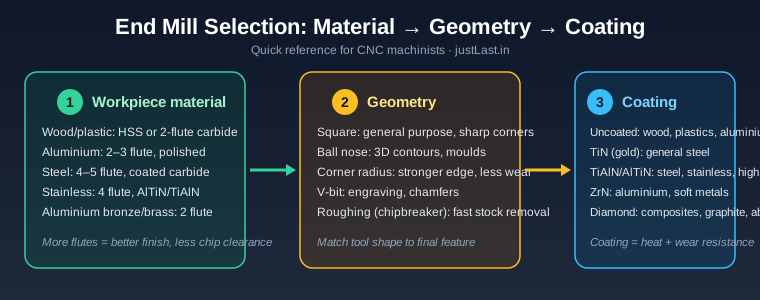
Table of Contents
1. Why End Mill Selection Matters
Most machining problems in a small workshop are not spindle problems or CAM problems — they are end mill selection problems. A cutter that is too soft for the material wears out in minutes. A cutter with the wrong flute count jams with chips and breaks. A cutter with no coating burns up in heat-treated steel. Choosing the correct end mill is the cheapest productivity upgrade a CNC shop can make, because the tool is the single point where the machine meets the material.
This guide walks through the three decisions that matter: cutter material, tool geometry, and coating. Once you can answer those three questions for any job, you can walk into any tooling catalogue and pick the right part number without guessing.
2. Cutter Materials: HSS vs Carbide
There are two practical cutter materials in everyday CNC work: high-speed steel (HSS) and solid carbide. HSS end mills are tougher, cheaper, and more forgiving of vibration and interrupted cuts. They are an excellent choice for wood, plastics, aluminium, and occasional mild steel, especially on lighter machines like a GRBL router where rigidity is limited and a brittle carbide tool would chip on chatter.
Solid carbide end mills are much harder and can run 2-4 times faster with better heat resistance. They hold an edge far longer in steel, stainless, and abrasive materials, but they are brittle — a heavy interrupted cut or a loose collet can snap them instantly. For a workshop that machines steel regularly, carbide pays for itself through speed and tool life; for a hobby router cutting plywood, HSS is often the smarter buy.
A good rule: carbide for anything harder than aluminium, HSS for soft materials and for machines with flexible frames. This decision also affects your feeds and speeds, because carbide allows much higher cutting speeds than HSS on the same material.
3. Flute Count and What It Changes
Flute count is the number of cutting edges on the tool, and it balances two competing needs: chip clearance and surface finish. A 2-flute end mill has large gullets that evacuate chips quickly, which makes it ideal for aluminium, plastics, and wood — materials that produce long, stringy chips. A 4-flute end mill has more cutting edges, so it gives a better finish and a stronger core, but its small gullets clog easily in gummy materials.
For steel and stainless steel, 4-flute and 5-flute tools are standard because the smaller chip load per tooth and stiffer core suit the higher cutting forces. For finishing passes on steel, even 5- and 6-flute tools are common. The pattern is simple: more flutes = more edge contact = better finish but less chip room.
There is also a special class of tools with variable helix and variable pitch geometry, designed to break up harmonics and reduce chatter. If you fight vibration on deep cuts in steel, a variable-helix end mill is often the fix — the same principle behind chatter control that we discussed in our guide to smart CAM strategies for machining time reduction.
4. End Mill Geometry Types
The shape of the cutting end determines what feature the tool can produce. Keep these four common geometries in mind:
- Square end mills produce flat-bottomed slots and sharp inside corners. They are the general-purpose workhorse for profiling and pocketing.
- Ball nose end mills have a hemispherical tip for 3D contouring, moulds, and sculpted surfaces. They leave a scalloped finish that requires a smaller stepover to smooth out.
- Corner radius end mills (bull nose) round the edge between the end and the side, which strengthens the cutting edge and resists chipping. They are ideal for hard steels and roughing where sharp corners would break.
- V-bit / chamfer tools cut angled features for engraving, lettering, and chamfers.
For roughing operations, chipbreaker (serrated) end mills break chips into small pieces, allowing aggressive depths of cut with less vibration. If you are doing heavy stock removal on a 5-axis setup or a rigid VMC, a chipbreaker roughing end mill can cut cycle time dramatically — see our 5-axis machining guide for how finishing strategies change with tooling.
5. Coatings and When to Use Them
Coatings are thin ceramic layers deposited on the tool to reduce friction, resist heat, and extend tool life. They matter most in ferrous materials where cutting temperatures get high enough to soften the base carbide.
- Uncoated: wood, plastics, and aluminium where coatings add nothing and a sharp polished edge is best.
- TiN (titanium nitride, gold): general-purpose steel work, offers a hard wear-resistant surface.
- TiAlN / AlTiN (blue-violet): the workhorse for steel, stainless, and high-temperature alloys. AlTiN performs better in dry and high-heat cutting.
- ZrN (zirconium nitride): recommended for aluminium and soft metals, resists built-up edge.
- CVD/PCD diamond: for composites, graphite, carbon fibre, and abrasive non-ferrous materials where only diamond-grade edges survive.
A coating is not a substitute for a correct cutter material. An uncoated carbide tool still beats a coated HSS tool in steel. Choose the base material first, then add the coating that matches the heat load of the job.
6. Shank, Length, and Tool Holders
The fluted portion is only half the tool. The shank diameter must match your collet — common sizes are 3.175 mm, 4 mm, 6 mm, 8 mm, and 12 mm. A 6 mm shank is the practical sweet spot for most small machines; it is stiff enough for clean cuts yet compatible with ER11 and ER16 collets used on most hobby spindles.
Keep the stick-out (the length of tool projecting from the holder) as short as possible. Every extra millimetre of overhang acts as a lever that amplifies vibration. Use a stub-length tool for shallow work and a long-reach tool only when the part geometry forces it. A roughing pass with an over-long tool is the fastest way to snap an end mill.
The tool holder matters too. A precision collet (ER) or a shrink-fit holder holds the tool true, which directly improves finish and tool life. A worn or dirty collet can introduce runout of a few hundredths of a millimetre — enough to ruin finish on a finishing pass. Keep collets clean and replace them when they no longer hold a test bar true.
7. A Practical Selection Workflow
Here is the exact sequence to follow before any job:
- Identify the workpiece material and its hardness.
- Choose cutter material: HSS for soft materials, carbide for metals.
- Select flute count: 2-flute for aluminium/wood, 4-flute for steel.
- Pick the geometry for the final feature (square, ball nose, or corner radius).
- Add a coating matched to cutting temperature.
- Verify shank diameter matches your collet and use the shortest stick-out.
- Set feeds and speeds from the tool manufacturer’s chart for that material.
Following this checklist prevents the two most common failures: buying the wrong tool and running the right tool with the wrong parameters. If you are new to these numbers, our feeds and speeds guide explains how to convert cutter data into spindle RPM and feed rate for wood, acrylic, and aluminium.
Frequently Asked Questions
How do I choose an end mill for aluminium?
Use a 2-flute or 3-flute uncoated carbide end mill for aluminium. Two flutes give maximum chip clearance to prevent the aluminium from welding to the tool, and a polished or ZrN-coated flute resists built-up edge. Run with coolant or mist when possible.
What is the difference between 2-flute and 4-flute end mills?
Two-flute tools have larger chip gullets for materials that produce long chips (aluminium, wood, plastics). Four-flute tools have more cutting edges for a better finish and a stiffer core for steel. Choose by material, not by preference.
Which end mill is best for steel?
A 4-flute or 5-flute solid carbide end mill with an AlTiN or TiAlN coating is the standard choice for steel. Use a corner radius variant for roughing to strengthen the edge, and a variable-helix tool if chatter is a problem.
How long should an end mill last?
Tool life depends on material, speeds and feeds, coolant, and depth of cut. As a rough guide, a properly run carbide end mill in mild steel should machine several hours before needing replacement, while a tool in abrasive material like GFRP may last far less. Watch for wear on the corner — replace the tool before it breaks, not after.
Can I use woodworking router bits in a CNC mill?
No. Router bits are designed for high-RPM machines and light frames, and their geometry is not meant for the rigidity or torque of a mill. Use actual end mills with the correct shank and flute design for the material.
Related Reading
- CNC Feeds and Speeds for Beginners: Complete Guide to Perfect Cuts
- CNC Router vs CNC Mill: Complete Comparison Guide
- CNC Machining Time Reduction: Smart CAM Strategies That Work
- 5-Axis CNC Machining: A Complete Guide
Sources
- Harvey Performance — End Mill Selection Guide
- Kennametal — Machining Technology Resources
- Sandvik Coromant — Milling Knowledge Centre
- CNC Cookbook — End Mill Buyer’s Guide
Disclosure: This post contains affiliate links. If you purchase through them, justLast.in may earn a small commission at no extra cost to you. Find a wide range of end mill sets on Amazon.in.