Key Takeaway: A 7.2 kW AC wallbox installed on a dedicated circuit is the sweet spot for home EV charging in India in 2026, costing roughly ₹25,000–40,000 all-in for most homes (₹40,000–55,000 if you need a DISCOM load upgrade). It charges a 40 kWh battery in 5–6 hours overnight at just ₹1–1.5 per km.
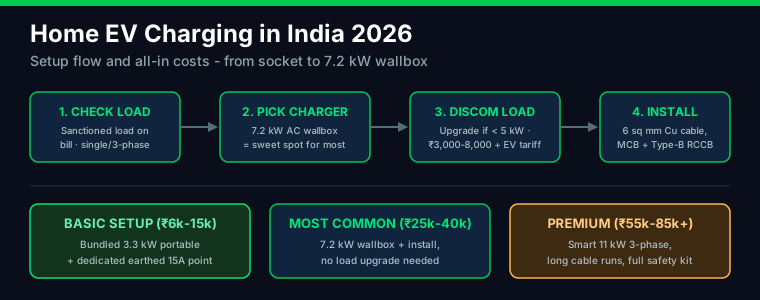
Table of Contents
1. Overview
Most EV owners in India charge at home, and once you do, public chargers start to feel like a backup plan rather than a daily necessity. You plug in overnight, wake up to a full battery, and skip the fuel queue entirely. Home EV charging in India costs ₹5–10 per unit of electricity versus ₹15–25 per unit at public DC fast chargers — which makes home charging the single biggest factor in EV running-cost savings.
This guide covers everything you need to set up home EV charging in India in 2026: the charger types, realistic all-in costs, the safety spec you must insist on, apartment rules, and state subsidies that can cut your bill.
2. Charger Types Compared
| Charger type | Power | Range per hour | Price | Best for |
|---|---|---|---|---|
| Portable (15A socket) | 2.3–3.3 kW | 12–18 km | Usually free / ₹8–12k | Scooters, occasional top-ups |
| 7.2 kW AC wallbox | 7.2 kW | 35–45 km | ₹35–45k unit, ₹25–40k installed | Most daily car owners |
| 11 kW AC wallbox | 11 kW (3-phase) | 55–60 km | ₹55–85k | High-mileage homes with 3-phase |
The 7.2 kW single-phase wallbox is the right choice for most Indian homes. It fully charges a typical 40 kWh battery in 5–6 hours overnight and runs on the 230 V single-phase supply most homes already have. Do not buy an 11 kW unit if your home is single-phase — it will only ever charge at single-phase speed. Check your car’s onboard AC charging limit too: if your car is capped at 3.3 kW, no wallbox will make it charge faster.
3. Home EV Charging India Cost Breakdown
The most common mistake is budgeting only for the charger unit. The total installed cost includes hardware, wiring, safety devices, and electrician fees. Here are realistic 2026 all-in figures:
| Setup | All-in cost | Notes |
|---|---|---|
| Bare minimum (bundled portable + dedicated earthed 15A point) | ₹6,000–15,000 | Works if your car has the free cable |
| 7.2 kW wallbox, no load upgrade | ₹25,000–40,000 | Most common single-phase install |
| 7.2 kW wallbox with load upgrade or long cable run | ₹40,000–55,000 | Includes DISCOM enhancement charges |
| Premium smart / 11 kW 3-phase setup | ₹55,000–85,000+ | Full safety kit, smart scheduling |
Individual components: a basic 7.2 kW wallbox (Tata Power EZ Charge, Statiq, Exicom) costs ₹35,000–45,000; a smart/app-enabled unit (Wallbox, Mahindra NXP Smart) ₹45,000–65,000. Installation with up to 15 m of wiring runs ₹5,000–15,000. A DISCOM load upgrade adds ₹3,000–8,000 (or more in some states). An earthing pit, if needed, costs ₹3,000–6,000.
If your sanctioned load is under about 5 kW, a 7.2 kW charger will likely need a load enhancement from your DISCOM before installation — apply through your state’s online portal and ask about EV-specific tariffs and time-of-day rebates while you are at it.
4. Safety Requirements You Must Not Skip
Home charging draws high current for many hours overnight — exactly the kind of load that punishes a lazy electrical job. These are the non-negotiables:
- Dedicated circuit: the wallbox must run on its own circuit straight from the main distribution board, not shared with the kitchen or AC.
- Correct cable: 6 sq mm copper (armoured for outdoor or buried runs), sized for both current and distance.
- Rated breaker: a 7.2 kW single-phase charger draws about 32 A continuously, so use a 40 A Type C MCB for headroom.
- DC fault protection: standard household Type A RCCBs cannot detect the smooth DC faults an EV onboard charger can produce. You need either a Type B RCCB or a charger with built-in 6 mA DC leakage detection (IS 17017 / IEC 61851 compliant).
- Earthing: solid earth under ~5 ohms; test the existing house earth first, install a dedicated earthing pit if needed.
- Surge protection: fit an SPD so grid spikes do not reach the charger.
Never run a wallbox through an extension cord or multi-plug board, and always use a BIS-certified charger. Insist on a written safety spec from your electrician and a test report confirming earthing, insulation resistance, and polarity before commissioning.
5. Charging in an Apartment or Society
For flat owners, the biggest hurdle is usually not the charger but the society committee. The good news: the regulatory environment has shifted. Maharashtra, for example, requires societies to issue an NOC within 7 days of application, and several states have moved toward a “right to charge” framework. Approach the committee with a written proposal covering the charger rating, wiring plan, who pays, and how billing will work through a dedicated sub-meter. A separate sub-meter for your charger keeps your usage billed to you rather than split across common areas.
State subsidies and tariffs to claim
Delhi offers a 100% subsidy of up to ₹6,000 per home charging point — the most direct charger subsidy of any state. Many states offer concessional EV tariffs (₹5–6.50/kWh) and time-of-day discounts for overnight charging (typically 10 pm–6 am), which can cut your effective per-kWh cost by 20–40%. Submit subsidy applications within 30 days of installation with a photo of the installed unit, the electrician’s invoice, and a meter reading. Our Haryana EV charging subsidy guide walks through the application process in detail.
6. Frequently Asked Questions
How much does home EV charging cost in India in 2026?
A 7.2 kW wallbox installed all-in commonly costs ₹25,000–40,000 for single-phase homes. With a DISCOM load upgrade or long cable run, budget ₹40,000–55,000; premium three-phase smart setups run ₹55,000–85,000+.
How much does it cost to charge an EV at home per full charge?
A typical 40 kWh battery costs about ₹240–360 for a full charge at domestic tariffs of ₹6–9 per unit, which works out to roughly ₹1–1.5 per km.
Do I need a 7.2 kW wallbox or is the free portable charger enough?
If your battery is under 35 kWh and your daily running under 80 km, the bundled portable charger on a properly wired, earthed 15A point is genuinely enough. For larger batteries or daily running above 80 km, the 7.2 kW wallbox is worth it for the convenience of a full charge overnight.
Can I install an EV charger in an apartment in India?
Yes. Submit a formal NOC application to your RWA or society management committee. In Maharashtra the society must respond within 7 days, and several states now have a “right to charge” that makes refusal harder. Use a dedicated sub-meter for billing.
Which charger brand should I buy?
BIS-certified options from Tata Power EZ Charge, ChargeGrid, Statiq, and Exicom are the most established in India. If your carmaker offers a bundled installation package at purchase, take it — it includes brand-warranted equipment and certified installers. Always verify CCS2 connector compatibility with your specific EV.
Related Reading
- EV Battery Health and Maintenance Guide 2026
- EV vs Petrol vs Diesel Total Cost of Ownership
- Rooftop Solar Panel Installation in India 2026
Sources
- EV Care — EV Home Charger Installation Cost in India 2026
- GlobalsBlog — How to Install an EV Charger at Home India 2026
- EVSelect — Home EV Charging Cost India 2026
- MeraEV — EV Home Charger Price & Types India 2026
Disclosure: This post contains affiliate links. As an Amazon Associate I earn from qualifying purchases.