Electric vehicle comparisons, solar panel installation guides, battery technology, EV scooters in India, charging infrastructure, and renewable energy
V2G technology lets your EV send stored energy back to your home or the grid. Learn how bidirectional charging works, which EVs support it, and whether it makes financial sense in 2026.
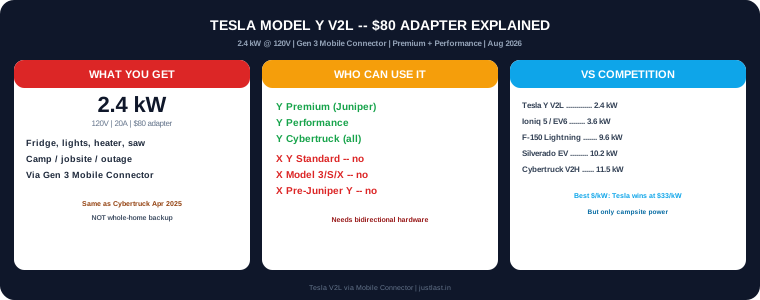
Tesla Model Y V2L adapter guide 2026 — what the $80 adapter does, which trims qualify, what 2.4 kW can run, and how it compares to Hyundai, Ford, and Chevy V2L.
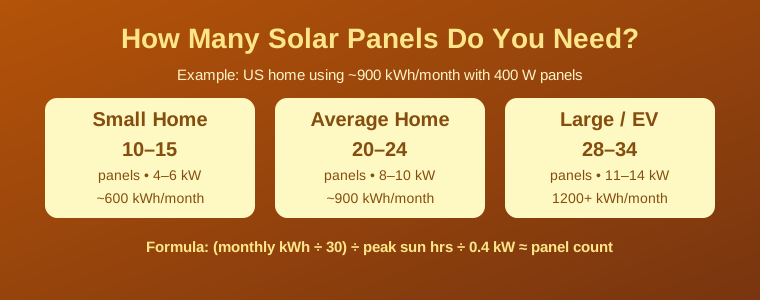
Key Takeaway: The average U.S. home using about 900 kWh a month typically needs 20–24 solar panels (an 8–10 kW system), but the exact number depends on your bill, your…
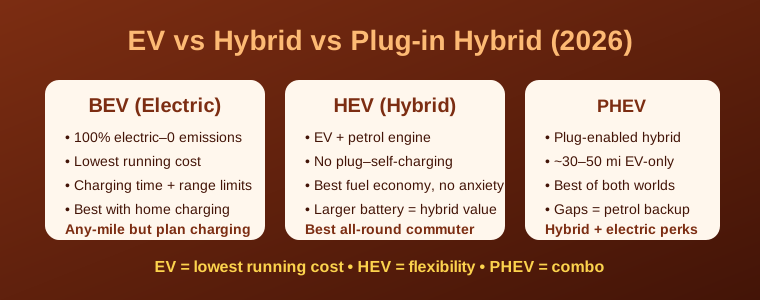
Key Takeaway: EVs win on running cost and emissions, hybrids win on convenience with no charging needed, and plug-in hybrids (PHEVs) split the difference — choose a full EV if…
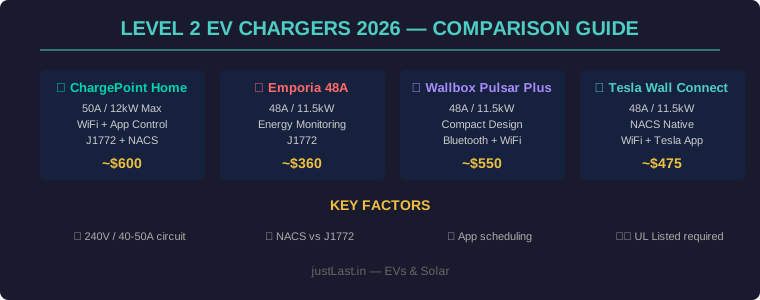
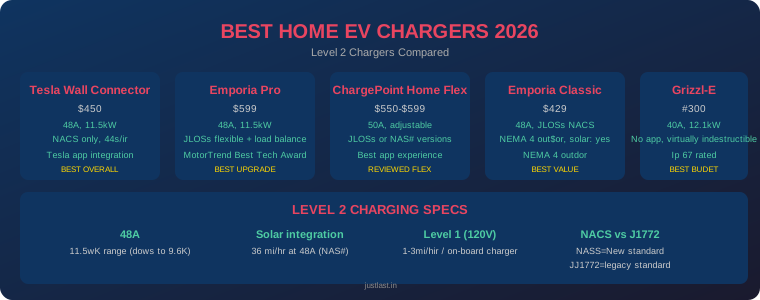
Key Takeaway: The Emporia 48A at ~$360 is the best value Level 2 EV charger in 2026 with energy monitoring built in, while the ChargePoint Home Flex offers the best…
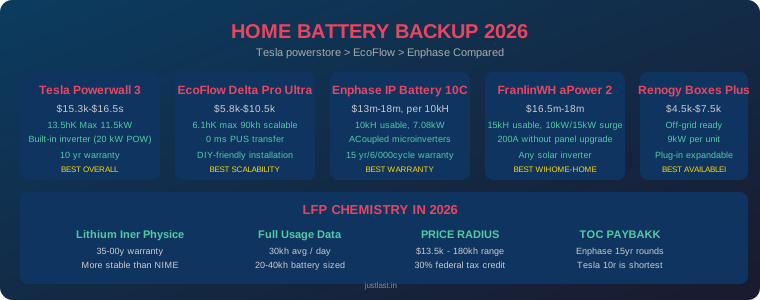
Key Takeaway: The best home battery backup in 2026 depends on your setup — the Tesla Powerwall 3 offers the best all-in-one value with an integrated solar inverter, the EcoFlow…
Key Takeaway: The best home EV charger in 2026 depends on your car and budget — the ChargePoint Home Flex offers the most flexibility for most drivers, the Tesla Wall…
Key Takeaway: Home solar battery storage has reached a tipping point in 2026 — Tesla Powerwall 3 leads on all-in-one simplicity, Enphase wins on modularity, and Franklin WH offers the…
Key Takeaway: The best portable solar generator in 2026 balances battery capacity, weight, and solar charging speed — and the right choice depends on whether you need emergency home backup…
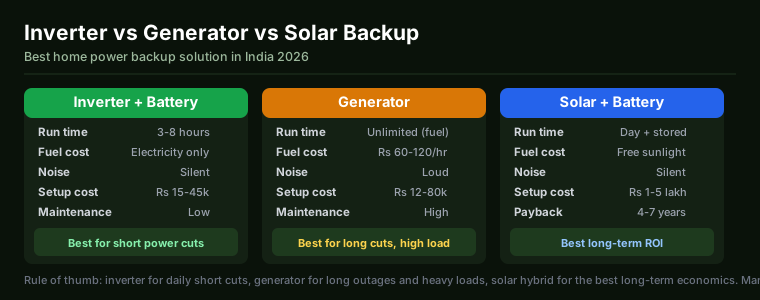
Key Takeaway: For short daily power cuts, an inverter with a battery is the best home backup solution; for long outages or heavy loads, a generator wins on runtime; and…
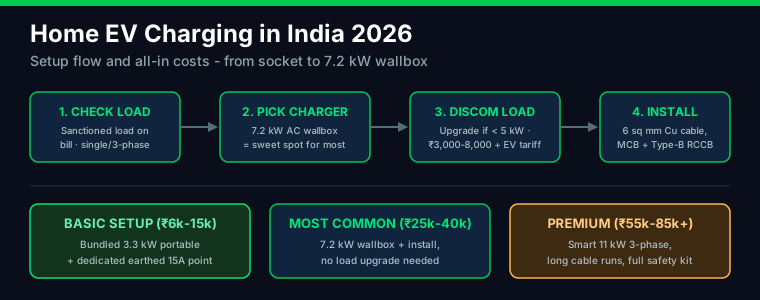
Key Takeaway: A 7.2 kW AC wallbox installed on a dedicated circuit is the sweet spot for home EV charging in India in 2026, costing roughly ₹25,000–40,000 all-in for most…
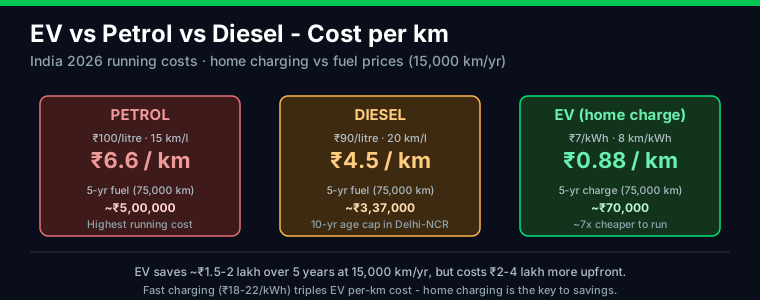
Key Takeaway: An EV charged at home costs just ₹0.88–1.5 per km versus ₹6.6 per km for petrol, saving roughly ₹1.5–2 lakh over 5 years at 15,000 km/year — but…