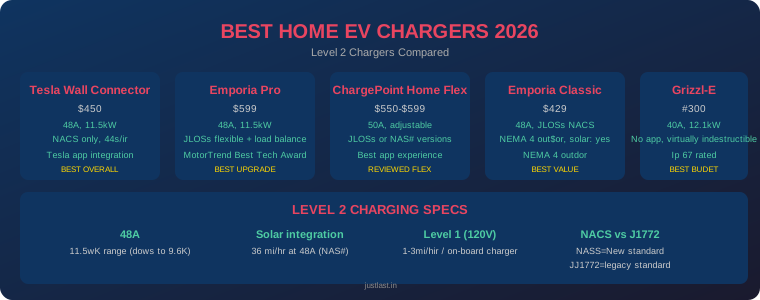

Key Takeaway: The Emporia 48A at ~$360 is the best value Level 2 EV charger in 2026 with energy monitoring built in, while the ChargePoint Home Flex offers the best app experience and smart scheduling for $600.
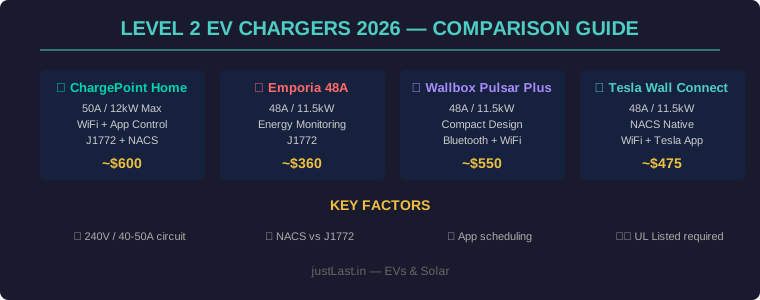
Table of Contents
1. Level 2 Charging Explained
Level 1 charging (standard 120V household outlet) adds only 3-5 miles of range per hour — enough for short commutes but impractical for anyone driving 30+ miles daily. Level 2 charging uses a 240V circuit to deliver 25-45 miles of range per hour, making it the standard for home EV charging.
A Level 2 charger requires a dedicated 240V circuit (similar to what powers your dryer) and professional installation. The investment typically pays for itself within 6-12 months compared to public charging station costs. For homeowners with solar panel installations, pairing a Level 2 charger with time-of-use scheduling means you can charge your EV with free solar energy.
2. Top 5 Home EV Chargers 2026
1. Emporia EV Charger — Best Value
The Emporia 48A charger delivers outstanding value with features that rival $600+ units. Built-in energy monitoring tracks every kWh consumed, with detailed charts in the Emporia app. UL listed, NEMA 4 rated for indoor/outdoor use, and compatible with all J1772 EVs.
- Max Amperage: 48A (hardwired) / 40A (plug)
- Power: 11.5 kW
- Connector: J1772
- Features: Energy monitoring, WiFi app, scheduling
- Price: ~$360
2. ChargePoint Home Flex — Best Smart Features
ChargePoint offers the most polished app experience. Schedule charging during off-peak hours, track energy costs, view charging history, and get notifications. The Home Flex supports both plug (NEMA 14-50) and hardwired installations, with a 50A maximum circuit rating.
- Max Amperage: 50A
- Power: 12 kW
- Connector: J1772 + NACS adapter available
- Features: Best-in-class app, scheduling, energy tracking
- Price: ~$600
3. Wallbox Pulsar Plus — Most Compact
The Wallbox Pulsar Plus is one of the smallest Level 2 chargers on the market. Its sleek design blends into any garage. Bluetooth and WiFi connectivity with the Wallbox app offers scheduling, energy tracking, and integration with solar systems. Available in 40A and 48A versions.
- Max Amperage: 48A
- Power: 11.5 kW
- Connector: J1772 or NACS
- Features: Compact design, solar integration, dynamic load balancing
- Price: ~$550
4. Tesla Universal Wall Connector — Best for Tesla Owners
The Tesla Wall Connector is the native choice for Tesla vehicles. The 2024+ “Universal” model includes both NACS (Tesla) and J1772 adapters, making it compatible with non-Tesla EVs too. WiFi connectivity enables scheduling via the Tesla app, and it integrates seamlessly with Tesla’s energy ecosystem.
- Max Amperage: 48A
- Power: 11.5 kW
- Connector: NACS (J1772 adapter included)
- Features: Tesla ecosystem, WiFi scheduling, sleek design
- Price: ~$475
5. Grizzl-E Classic — Most Durable
The Grizzl-E is built like a tank — a full metal enclosure with NEMA 4 rating for extreme weather. No WiFi or app (by design — less to go wrong), just reliable, high-amperage charging. Popular in cold climates and commercial installations.
- Max Amperage: 40A
- Power: 9.6 kW
- Connector: J1772
- Features: Metal housing, NEMA 4, no WiFi (reliable)
- Price: ~$430
3. Full Comparison Table
| Feature | Emporia | ChargePoint | Wallbox | Tesla | Grizzl-E |
|---|---|---|---|---|---|
| Price | $360 | $600 | $550 | $475 | $430 |
| Max Amps | 48A | 50A | 48A | 48A | 40A |
| WiFi/App | ✅ Yes | ✅ Best | ✅ Yes | ✅ Yes | ❌ No |
| Energy Monitoring | ✅ Detailed | ✅ Yes | ✅ Yes | ⚠️ Basic | ❌ No |
| NEMA Rating | NEMA 4 | NEMA 4 | NEMA 4 | NEMA 4 | NEMA 4 |
| Plug or Hardwire | Both | Both | Hardwire | Hardwire | Both |
| Warranty | 3 years | 3 years | 2 years | 4 years | 5 years |
| Best For | Value seekers | Smart features | Compact install | Tesla owners | Reliability |
4. Installation Requirements
Every Level 2 charger needs a dedicated 240V circuit. Here’s what to expect:
- Circuit breaker: 50A or 60A breaker (depending on charger amperage)
- Wire gauge: 6 AWG for 50A circuits, 4 AWG for 60A circuits
- Distance matters: Longer wire runs = higher installation cost
- Permits: Most jurisdictions require an electrical permit for 240V work
- Electrician cost: $200–$800 depending on panel capacity and distance
Some utilities offer rebates ($200–$1,000) for Level 2 charger installations. Check your local utility’s EV incentive program before purchasing.
5. EV Charger + Solar Integration
If you have solar panels, pairing them with a smart EV charger creates an incredibly efficient system:
- ChargePoint and Wallbox both offer solar surplus charging — the charger only runs when your solar panels produce excess power
- Time-of-use scheduling lets you charge during off-peak electricity rates (often 11 PM – 6 AM)
- Energy monitoring tracks exactly how much solar energy went into your EV vs. grid power
For homes with portable solar generators or battery backup systems, this integration maximizes your renewable energy usage and minimizes electricity costs.
6. Frequently Asked Questions
How long does it take to fully charge an EV at home?
With a 48A Level 2 charger (11.5 kW), you can add about 35-45 miles of range per hour. A typical EV with a 60 kWh battery charges from 0% to 100% in about 5-7 hours. Most drivers charge overnight from 20% to 80% in 3-4 hours.
Do I need a new electrical panel for an EV charger?
Not always. If your panel has an open slot and sufficient capacity (200A service is ideal), an electrician can add a 240V circuit without upgrading the panel. Older homes with 100A service may need a panel upgrade ($1,500–$3,000).
Can I use a Level 2 charger with any EV?
Yes, with the right connector. Most Level 2 chargers use J1772, which works with all EVs sold in North America (Tesla requires a small adapter). Tesla’s Wall Connector uses NACS but comes with a J1772 adapter for non-Tesla vehicles.
What’s the difference between NACS and J1772?
J1772 is the current standard Level 2 connector used by all non-Tesla EVs in North America. NACS (Tesla’s connector) is becoming the new standard — most automakers have announced adoption starting 2025-2026. Chargers like the ChargePoint Home Flex and Tesla Universal Wall Connector support both.
Is it cheaper to charge at home vs. public stations?
Significantly. Home charging at $0.12/kWh costs about $5 for a full charge. Public Level 2 stations typically charge $0.30-$0.50/kWh, costing $15-$25 for the same charge. DC fast charging is even more expensive at $0.40-$0.60/kWh.
Related Reading
- Home Solar Battery Backup Guide 2026
- EV vs Petrol/Diesel: Total Cost Comparison
- Portable Solar Generators Buying Guide
Sources
- ChargePoint — Home EV Charging Solutions
- Emporia — Energy Monitoring EV Charger
- Wallbox — Pulsar Plus EV Charger
- NREL — Home EV Charging Cost Analysis 2024
Disclosure: This post contains affiliate links. As an Amazon Associate I earn from qualifying purchases.