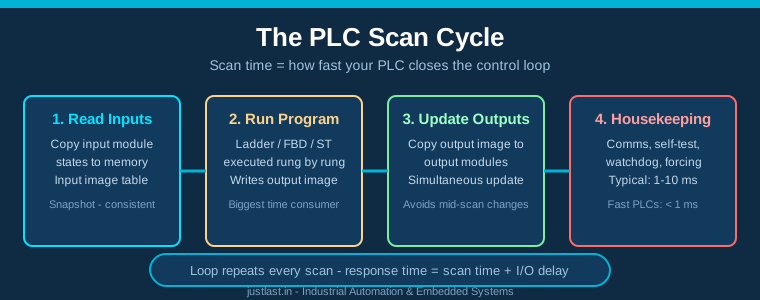
PLC Scan Time Explained: How Cycle Time Affects Real-Time Machine Control
PLC scan time explained: the four-stage scan cycle, scan vs response time, jitter, and how to measure and optimise cycle time for reliable real-time machine control.

PLC scan time explained: the four-stage scan cycle, scan vs response time, jitter, and how to measure and optimise cycle time for reliable real-time machine control.
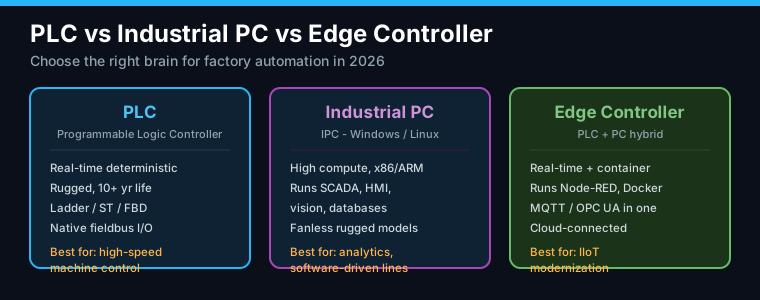
Key Takeaway: A PLC delivers deterministic real-time control for high-speed machine logic, an industrial PC (IPC) brings Windows/Linux computing power for analytics and SCADA, and edge controllers combine both -…
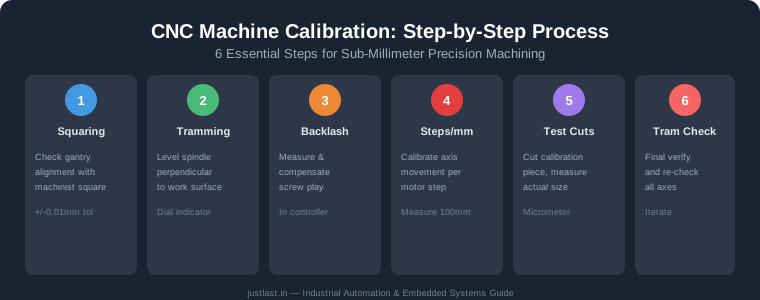
Key Takeaway: Proper CNC machine calibration is essential for achieving sub-millimeter precision in machining operations — the six-step process covers squaring, tramming, backlash compensation, steps-per-unit tuning, test cuts, and final…
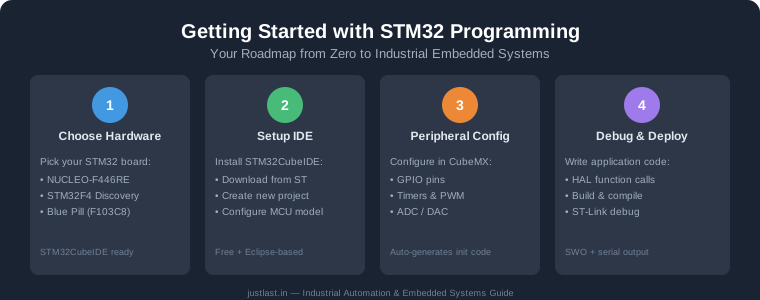
Key Takeaway: Getting started with STM32 programming requires STM32CubeIDE, a basic understanding of ARM Cortex-M architecture, and a structured approach to peripheral configuration — but the investment pays off with…
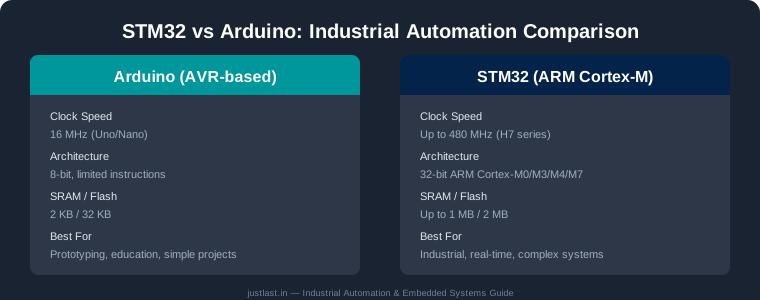
Key Takeaway: For industrial automation applications, STM32 microcontrollers offer superior performance, memory, and peripheral support compared to Arduino, making them the preferred choice for production systems — but Arduino remains…

Key Takeaway: The global CNC machining market has surpassed $100 billion in 2026, driven by AI-native machining, digital twin integration, and hybrid manufacturing. Five-axis machines now account for over 35%…

Key Takeaway: The line between stepper motors and servo motors has blurred dramatically. Closed-loop stepper systems now compete directly with traditional servos in precision motion control applications, offering encoder feedback…